Chalking
Chalky Factory Paint
Old panel paint turns to powder that rubs off on a glove. Acrylic will not bond to that powder, so a detergent wash and rinse come first, followed by a tape test.
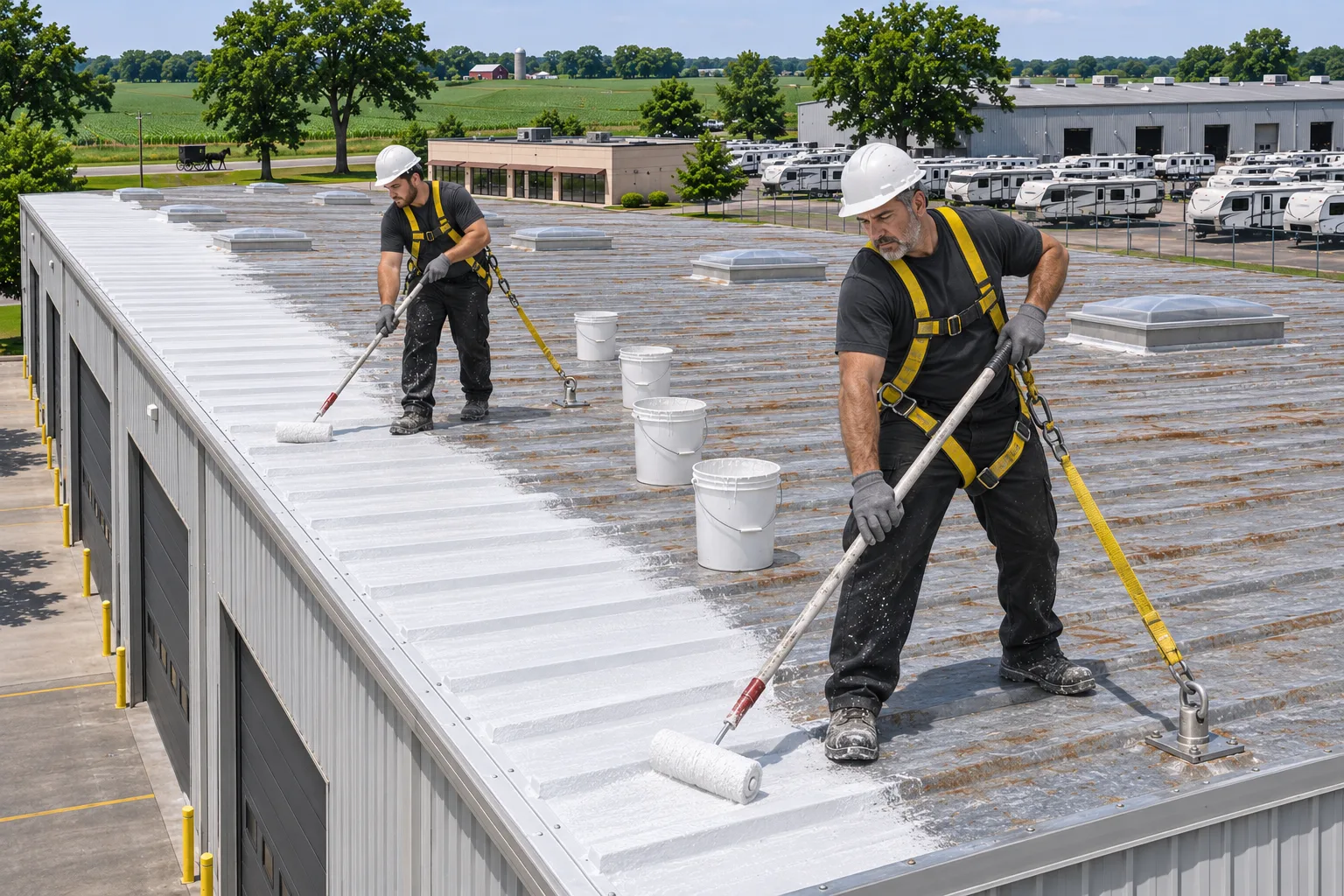
As an Elkhart acrylic roof coating contractor, we restore sloped metal roofs with water-based acrylic, timed to dry, mild weather so each coat cures right.
Elkhart acrylic roof coating works best on roofs that drain. The matrix compares acrylic with silicone and with repairing panels first.
| Roof Condition | Acrylic | Silicone | Repair Panels First |
|---|---|---|---|
| Sloped panels that dry within hours of rain | Usually Fits | Sometimes | Rarely |
| Low bays where water sits for a day | Rarely | Usually Fits | Sometimes |
| Faded, chalky paint on solid steel | Usually Fits | Sometimes | Rarely |
| Rust holes in a handful of panels | Sometimes | Sometimes | Usually Fits |
| A roof that already carries silicone | Rarely | Usually Fits | Rarely |
Acrylic bonds to clean, dry, primed metal. These four conditions get handled before it goes on.
Old panel paint turns to powder that rubs off on a glove. Acrylic will not bond to that powder, so a detergent wash and rinse come first, followed by a tape test.
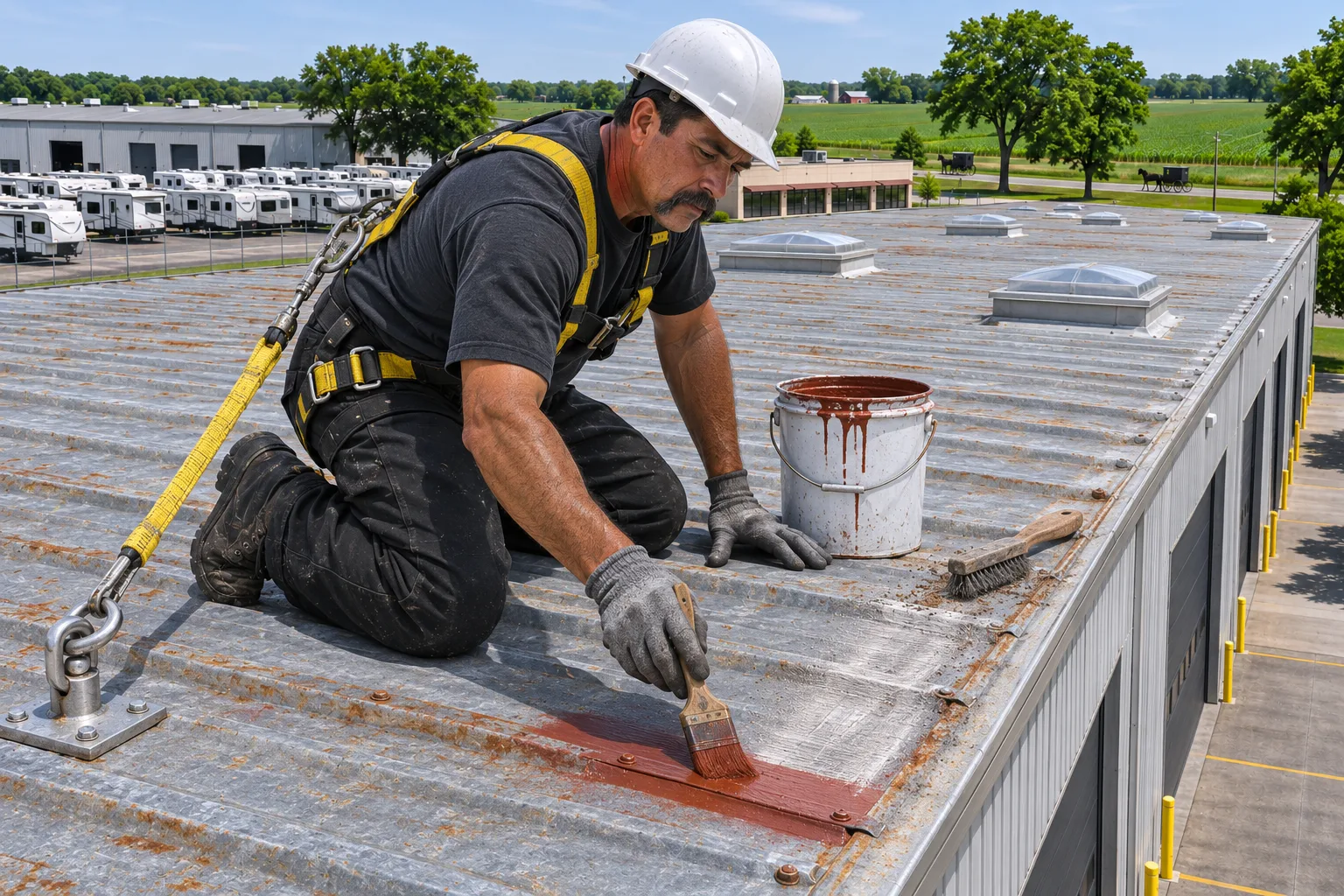
Moisture trapped in laps rusts the steel from the edge inward. We wire-brush the scale, prime the bare metal, and seal the lap before the base coat.
Warm, dry afternoons can set acrylic to the touch in a few hours, while humid days and evening dew stretch that out. Rain before it sets washes it off, so forecasts drive the schedule.
Cracked washers let water run down the screw shank. Each one gets an oversized screw and new washer, then a sealant cap before the acrylic goes over it.
Acrylic covers the sloped field on many Elkhart roofs, with another system on the trouble spots.
| System | Where It Fits | Check First |
|---|---|---|
| Commercial Metal Roof Coating | Panel roofs leaking at screws and laps | Screw replacement count |
| Silicone Roof Coating | Flat bays next to sloped acrylic areas | Dividing line between the two systems |
| Acrylic Roof Coating | Sloped panels draining within hours | Dry window above minimum temperature |
| Spray Foam Roofing | Roofs adding insulation under the topcoat | Foam dryness and topcoat choice |
| Shingle Roof Coating | Shingle mansards on plant fronts | Shingle maker guidance |
Acrylic is a practical finish for sloped metal roofs that drain. The main gain comes first, then three more.
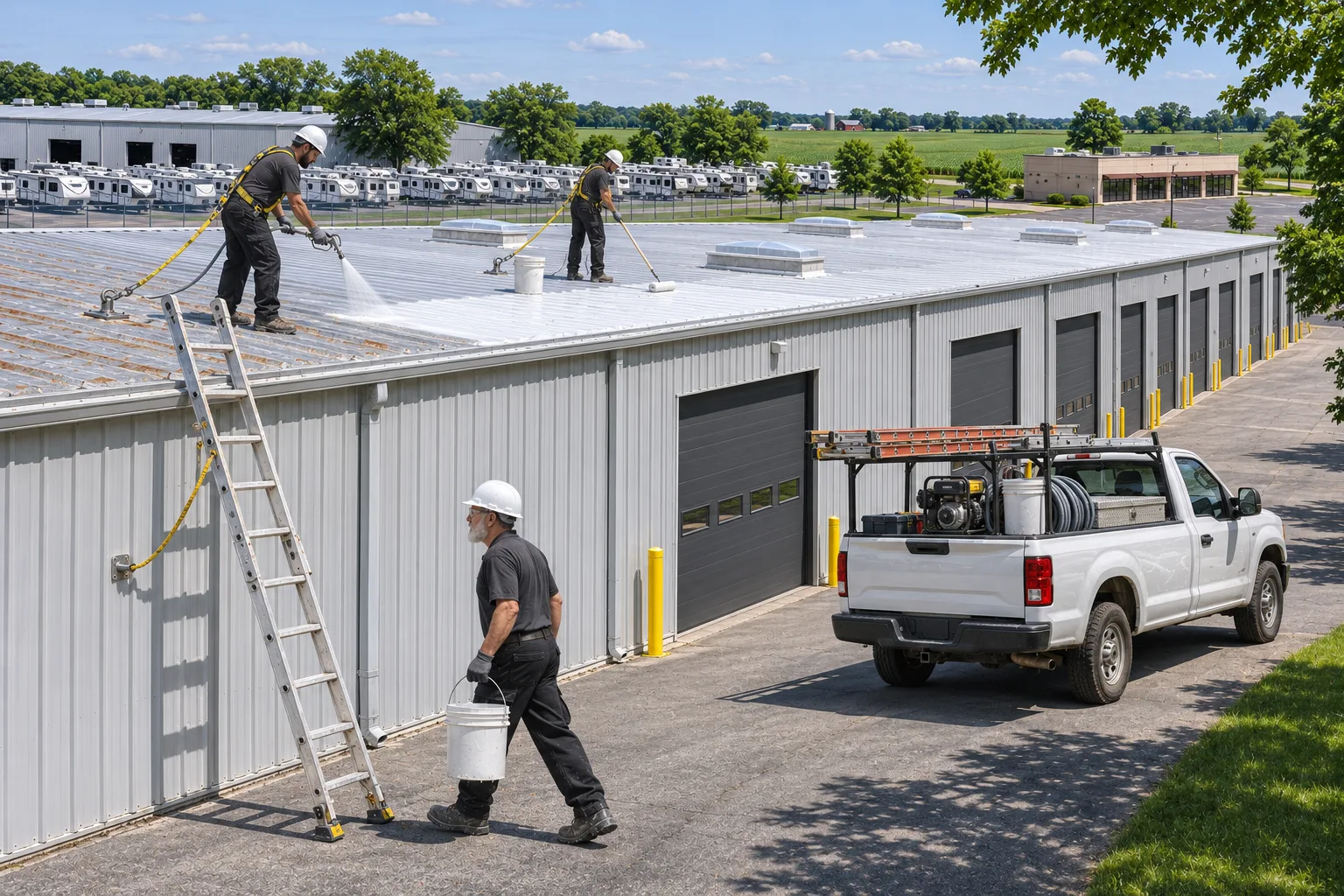
Acrylic covers chalky paint, primed rust, and sealed laps with a flexible white or light finish that moves with the steel through hot afternoons and cold nights.
A light acrylic finish reflects sunlight off the steel, keeping heat out of shops and storage space below on hot days.
Acrylic bonds well to itself, so a future recoat is a wash, spot repairs, and a fresh topcoat over the same base.
Low odor makes acrylic workable over occupied shops and offices, with rooftop air intakes still scheduled around spray days.
Rub a hand across a panel and send us a photo. We will price the wash, primer, and acrylic system for your roof size.
Acrylic leans on the weather window more than any other system we install.
We check slope and drainage, rub-test the paint for chalk, look for rust at laps and edges, and confirm water leaves the panels fast enough for acrylic.
Spray days need a dry forecast above the product minimum, with time for the coat to set before dew or rain. Spring and fall days start after the dew lifts.
Detergent washing removes chalk and dirt. Screws get replaced, laps get sealed, and rust gets primed with a product that matches the acrylic system.
Two contrasting colors go on, base first and finish second, so missed spots show. Thickness gets checked against the data sheet on each section.
A last walk confirms every lap and curb is covered. You keep the product data and measured thickness for the next recoat.
Acrylic handles the sloped field. These four cover the low spots, insulation, and other roof types around it.
Screw-down and standing seam panels, sealed and coated.
Commercial Metal Roof Coating page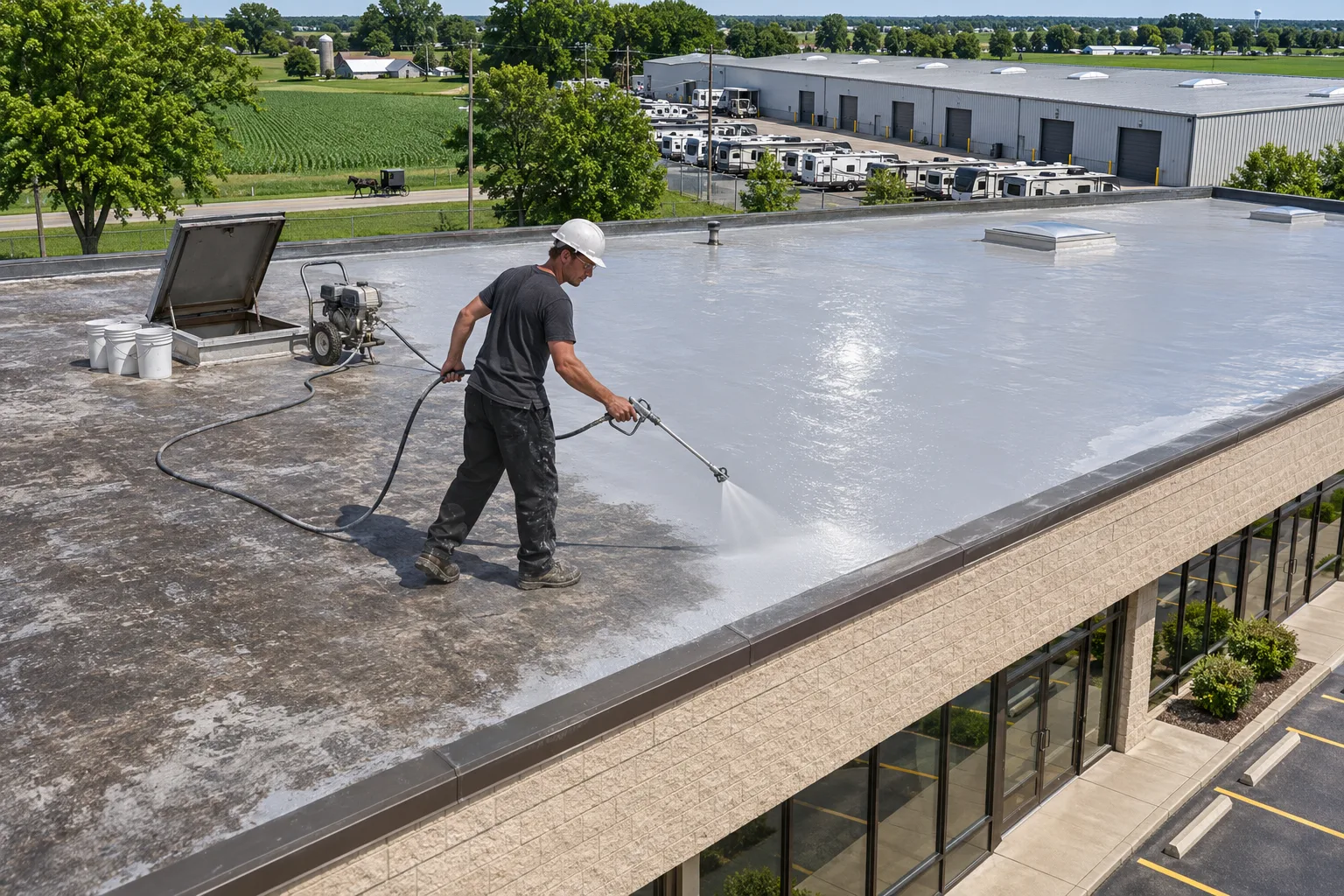
Low, wet sections where rain and snowmelt sit.
Silicone Roof Coating page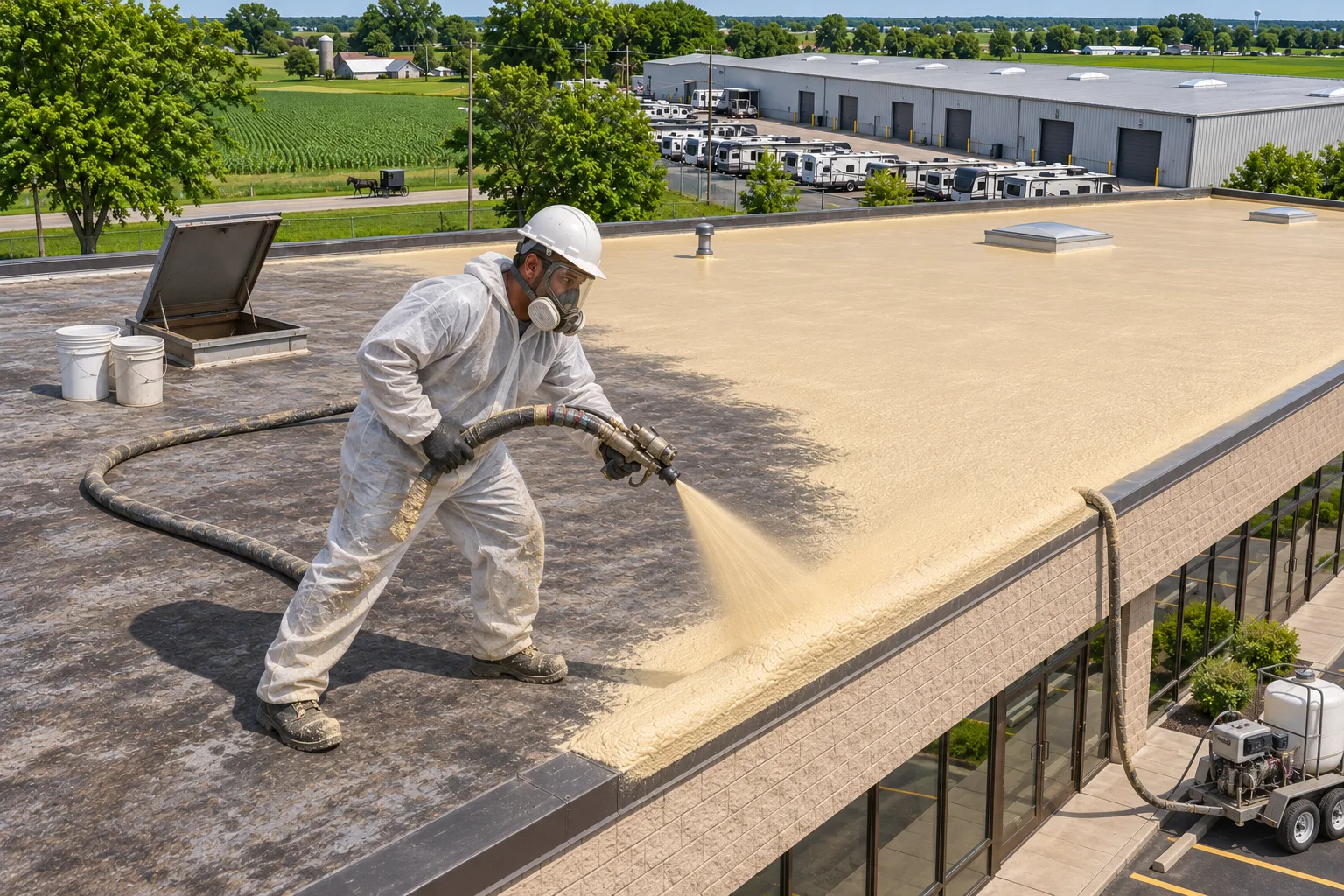
An insulated layer over panels, laps, and screws.
Spray Foam Roofing page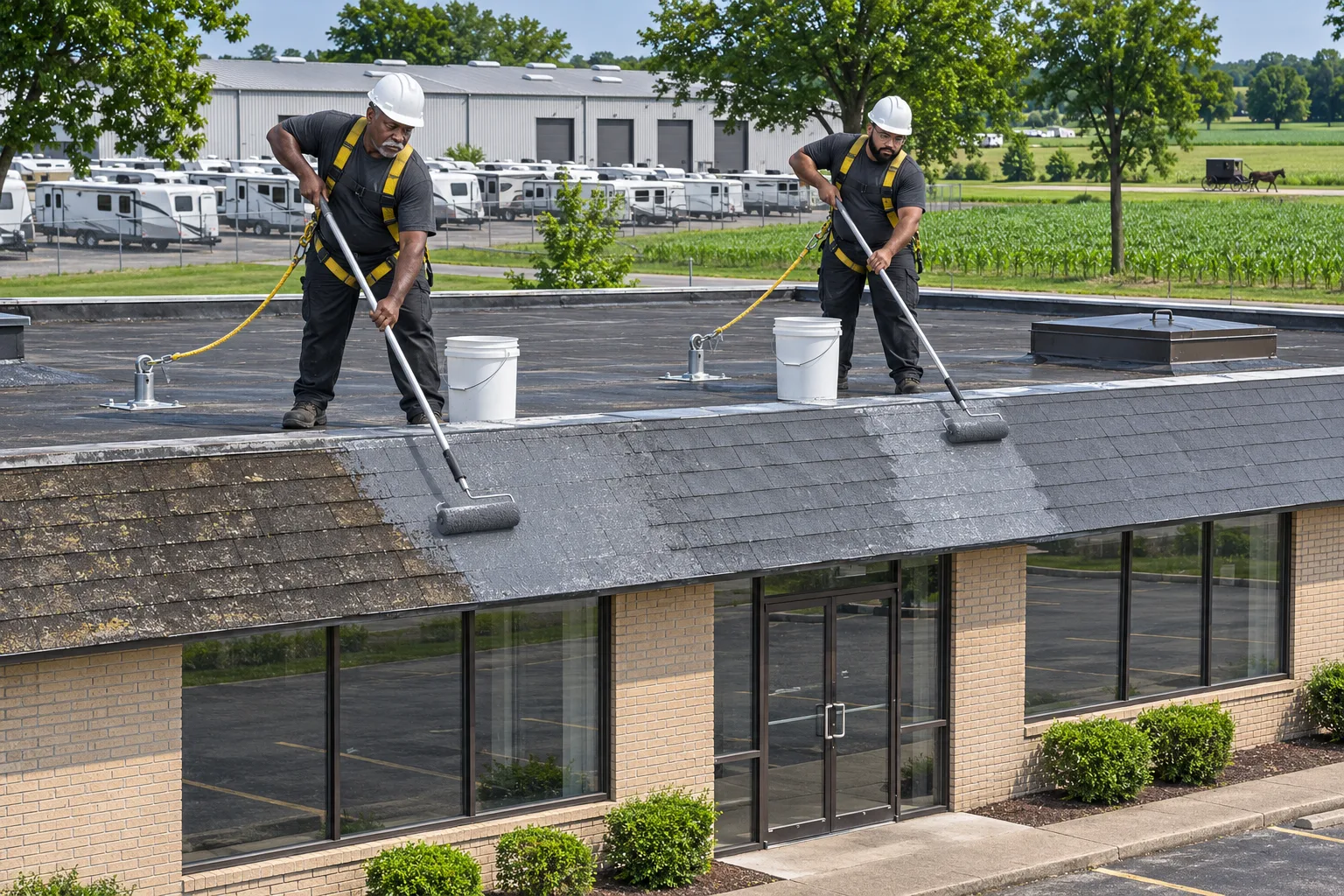
Aged but flat shingles on commercial buildings.
Shingle Roof Coating pagePlain answers on coats, cure times, weather limits, and code for acrylic on Elkhart roofs.
Most acrylic systems call for a base coat and a topcoat, plus extra material at seams and screws. The spec sets a minimum dry film thickness, and the number of passes follows from it. Contrasting colors for each coat help the crew see full coverage, and we follow the data sheet for the system installed.
Yes, on metal roofs with enough slope to drain. Acrylic bonds well to primed steel, reflects sunlight, and flexes as panels move. Being water-based, it can be damaged by rain soon after application or by long-term ponding, which is why it suits sloped panels better than flat bays.
On warm, dry days acrylic often feels dry within a few hours, and full cure takes longer. Humidity, cool air, and dew slow it. Rain before it sets can rinse it off, so we schedule around a dry window that covers the cure requirement on the product sheet.
Each acrylic product lists a minimum air and surface temperature, and the roof has to stay above it and dry until the coat sets. Cold nights and morning dew shorten spring and fall workdays. Crews start after the dew burns off and stop early enough for the coat to set before evening.
Commercial buildings in Indiana fall under the Indiana Building Code, 675 IAC 13, adopted by the Fire Prevention and Building Safety Commission. The commission lists the 2014 edition, based on the 2012 International Building Code, as the one in effect. Local building departments enforce it, and we confirm current requirements with them.
Acrylic does not bond reliably to silicone, so a roof already coated with silicone stays with silicone for its recoats. Before pricing, we test the existing surface to learn what is on the roof, since older coatings are often missing from building records.
Send the roof size and a photo of the panels, and we will schedule an acrylic job around the next dry window.