Additions
Leaks Where Additions Meet
Additions built years apart meet at a step or valley where flashing was pieced in by hand. Those transitions leak first, so they get new flashing and fabric reinforcement before any coating.
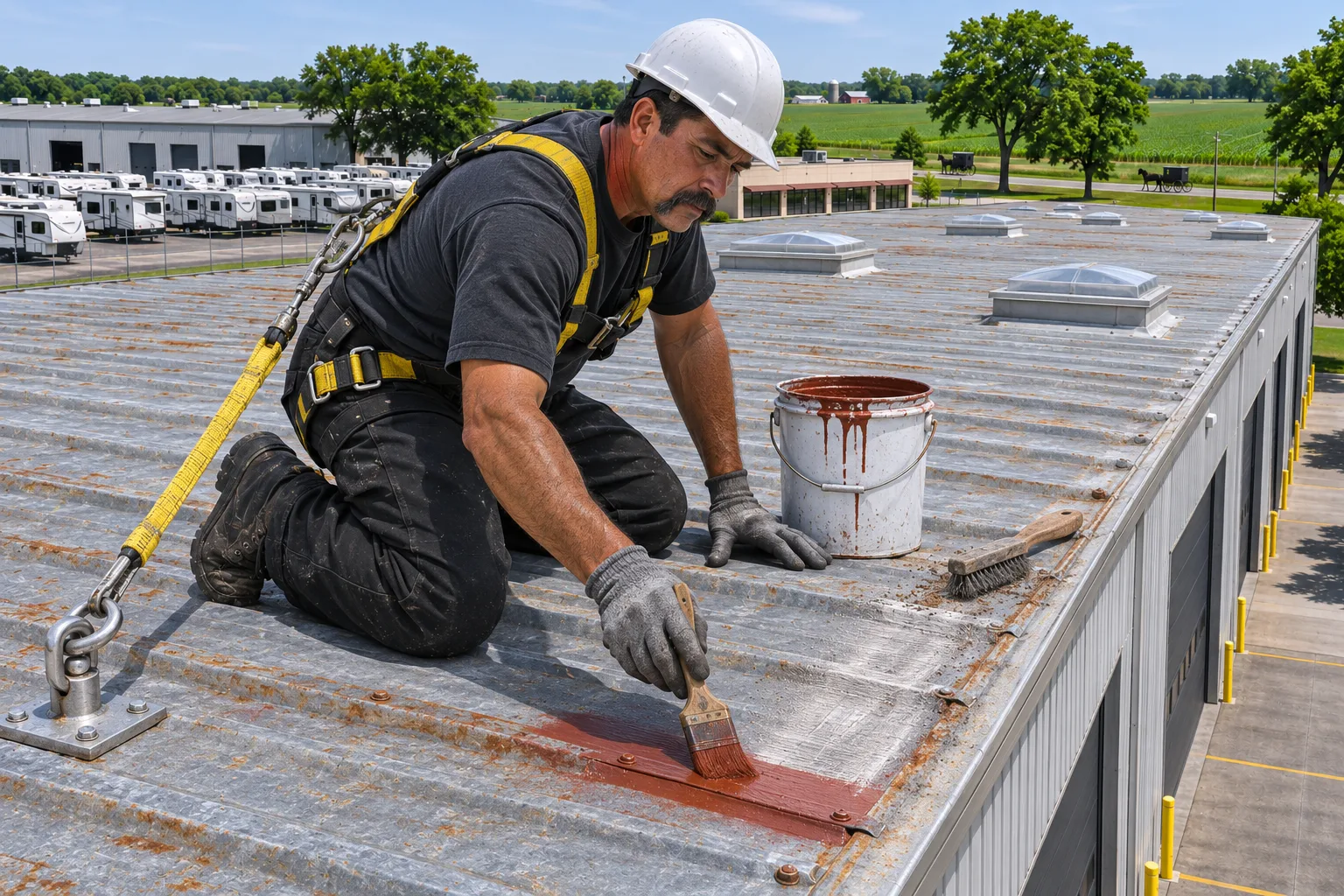
As a Goshen metal roof coating contractor, we coat plants and storage buildings one roof at a time, so the rest of the campus keeps working.
Goshen metal roof coating work often means several buildings on one property, each with its own roof age and leak history.
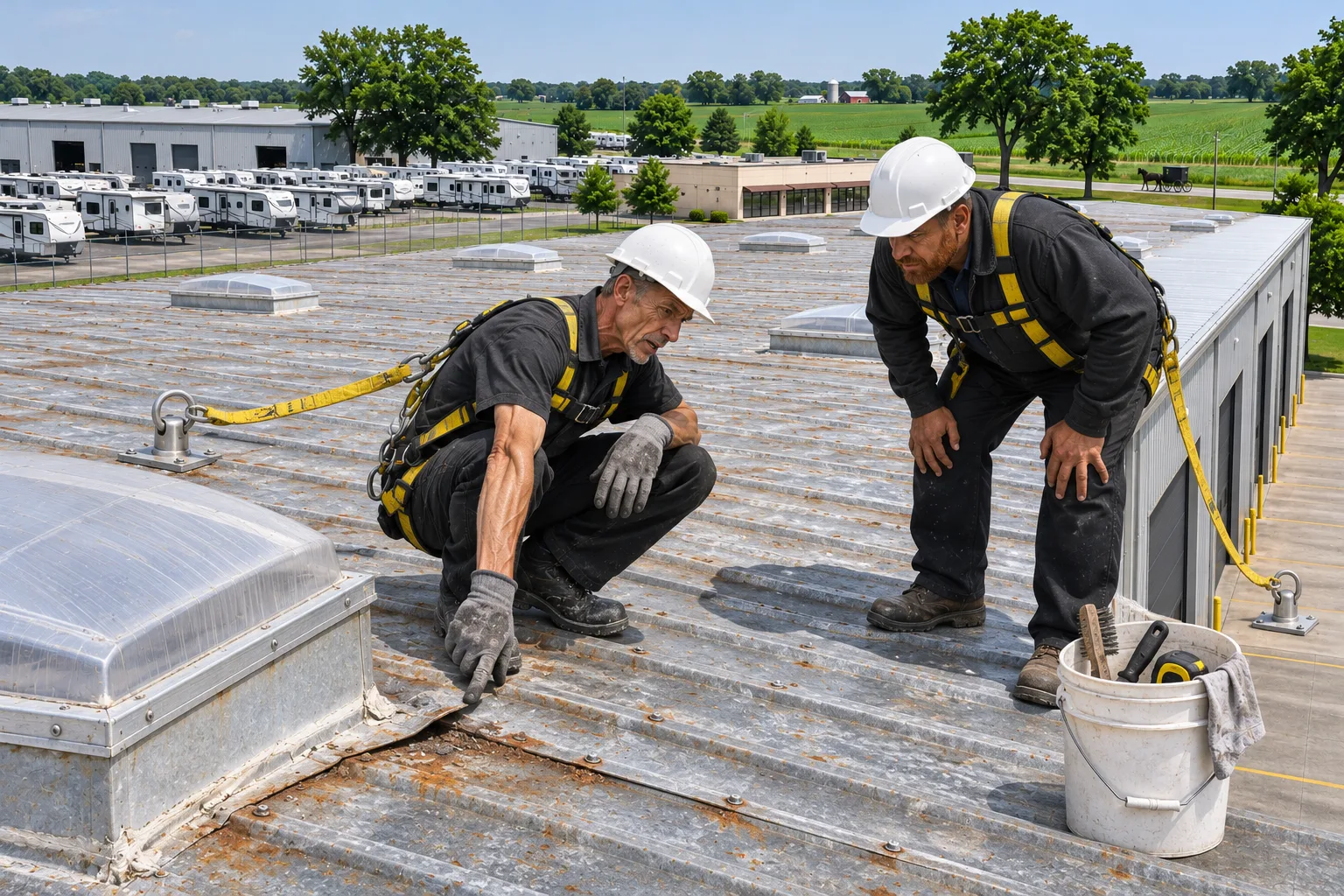
Manufacturing and storage campuses in Goshen tend to grow a building at a time, so one property can carry roofs from different decades. We walk each one, log its screws, laps, skylights, and rust, and rank the roofs by how badly they leak.
You get one scope for the whole campus, split into phases you can schedule around production and spread across budget years.
Four conditions turn up on most Goshen plant and storage roofs we walk, and each gets repaired before coating.
Additions built years apart meet at a step or valley where flashing was pieced in by hand. Those transitions leak first, so they get new flashing and fabric reinforcement before any coating.
Older buildings on a campus often carry a different screw size and panel profile than newer ones. We match oversized replacements to each profile so every head seals tight under the coating.
Storage buildings see less roof traffic, so eave and gutter rust spreads unnoticed for years. We brush, prime, and seal those edges before the field coat goes on.
Daylight panels on production roofs yellow and crack with age. Brittle ones get replaced in the same profile, and their laps get sealed along with the surrounding steel.
On a campus, coating one roof at a time spreads both the work and the cost. The main gain comes first, then three more.
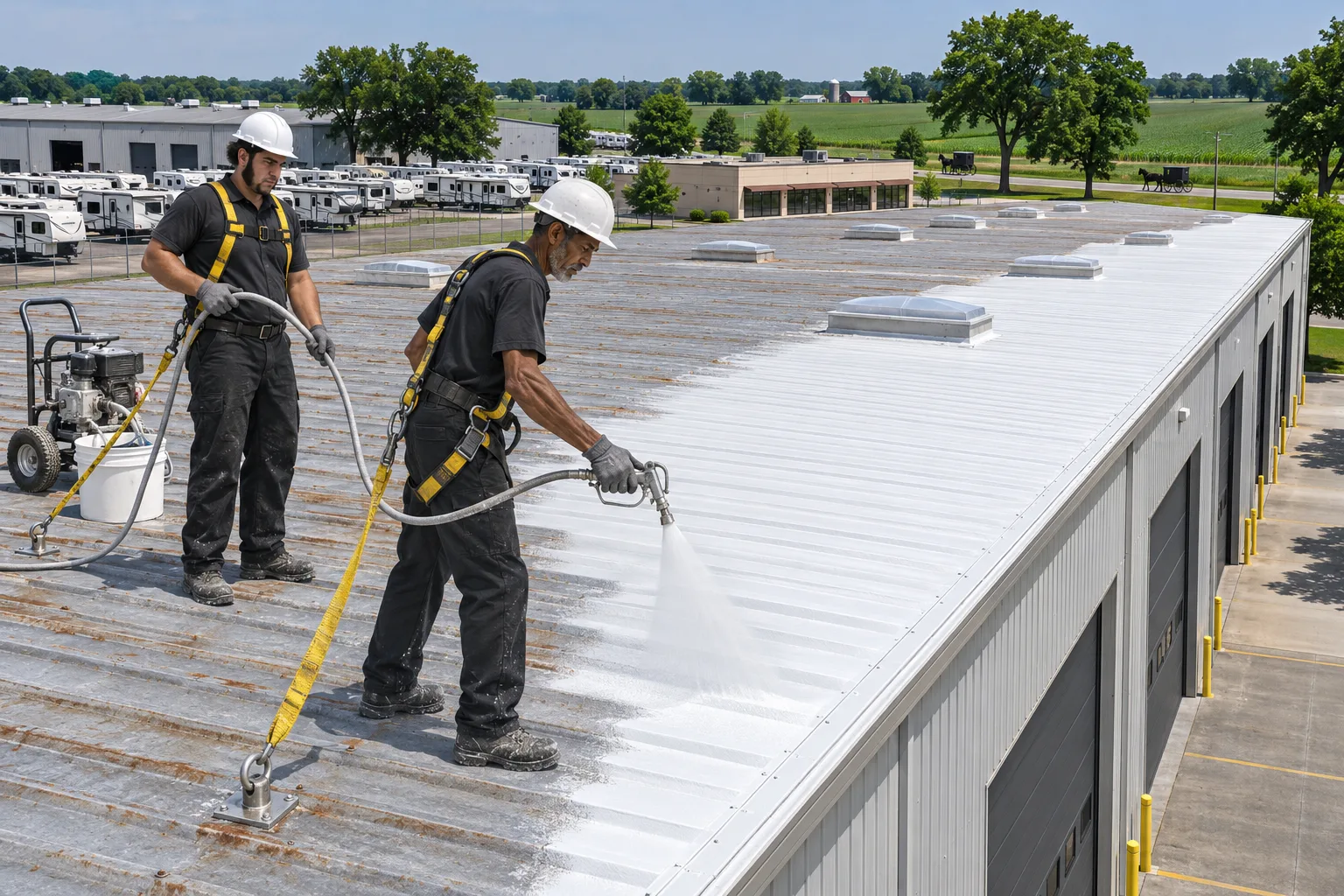
Coating the buildings in phases keeps each roof watertight while spreading the work over several seasons. Each phase uses the same system family, so future recoats stay simple across the whole campus.
Crews work one roof while the other buildings operate normally, with lifts and staging moved between phases.
Each roof gets its own photos, thickness readings, and product data, filed under the building name.
Coating storage roofs before rust spreads costs far less than replacing their panels a few winters later.
Goshen campuses often need more than one system. Here is how they split across the buildings.
| System | Where It Fits | Check First |
|---|---|---|
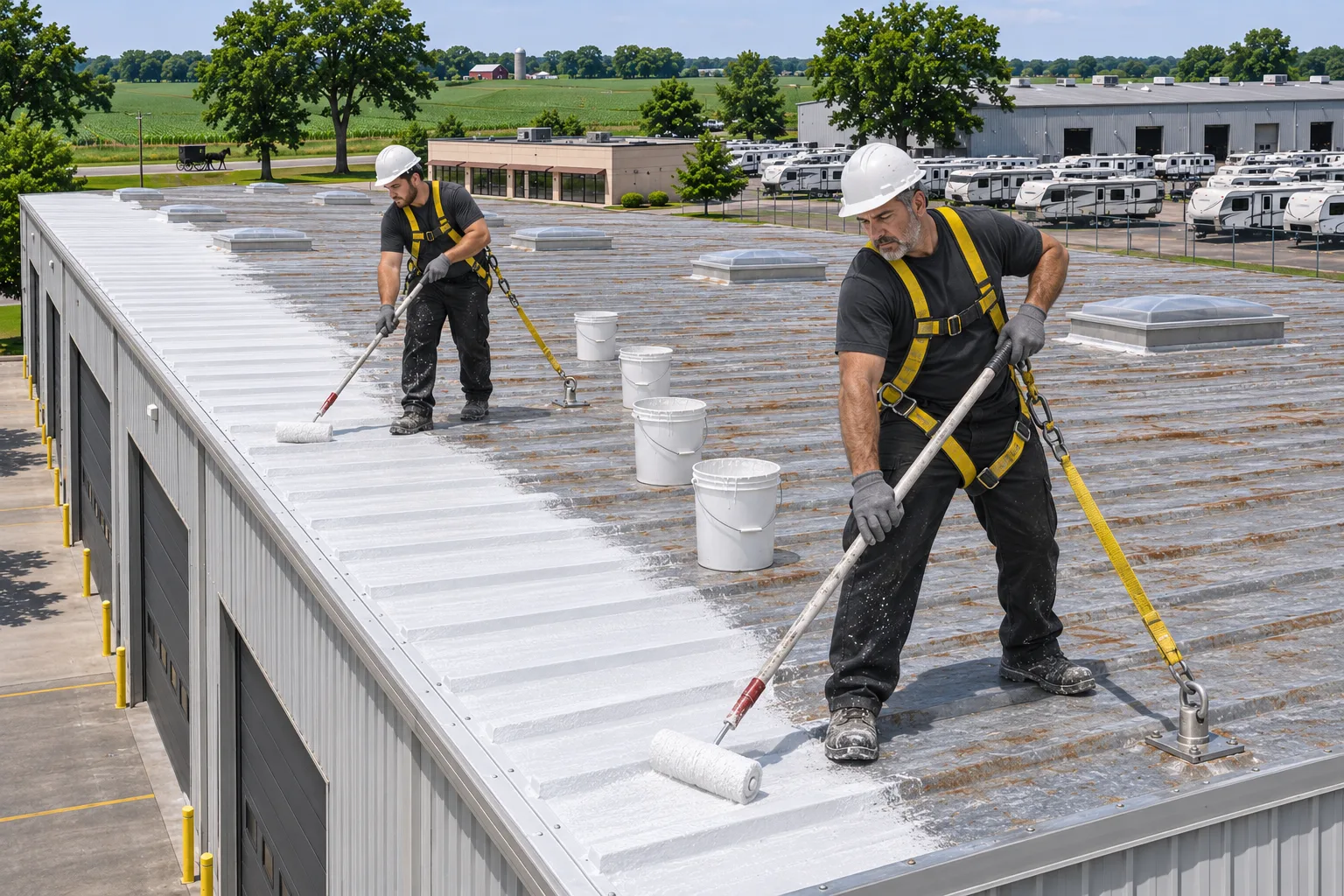
| Commercial Metal Roof Coating | Production buildings with screw-down panels | Screw size per building |
| Silicone Roof Coating | Low connectors between buildings | Water at the transitions |
| Acrylic Roof Coating | Sloped storage roofs | Dry days between phases |
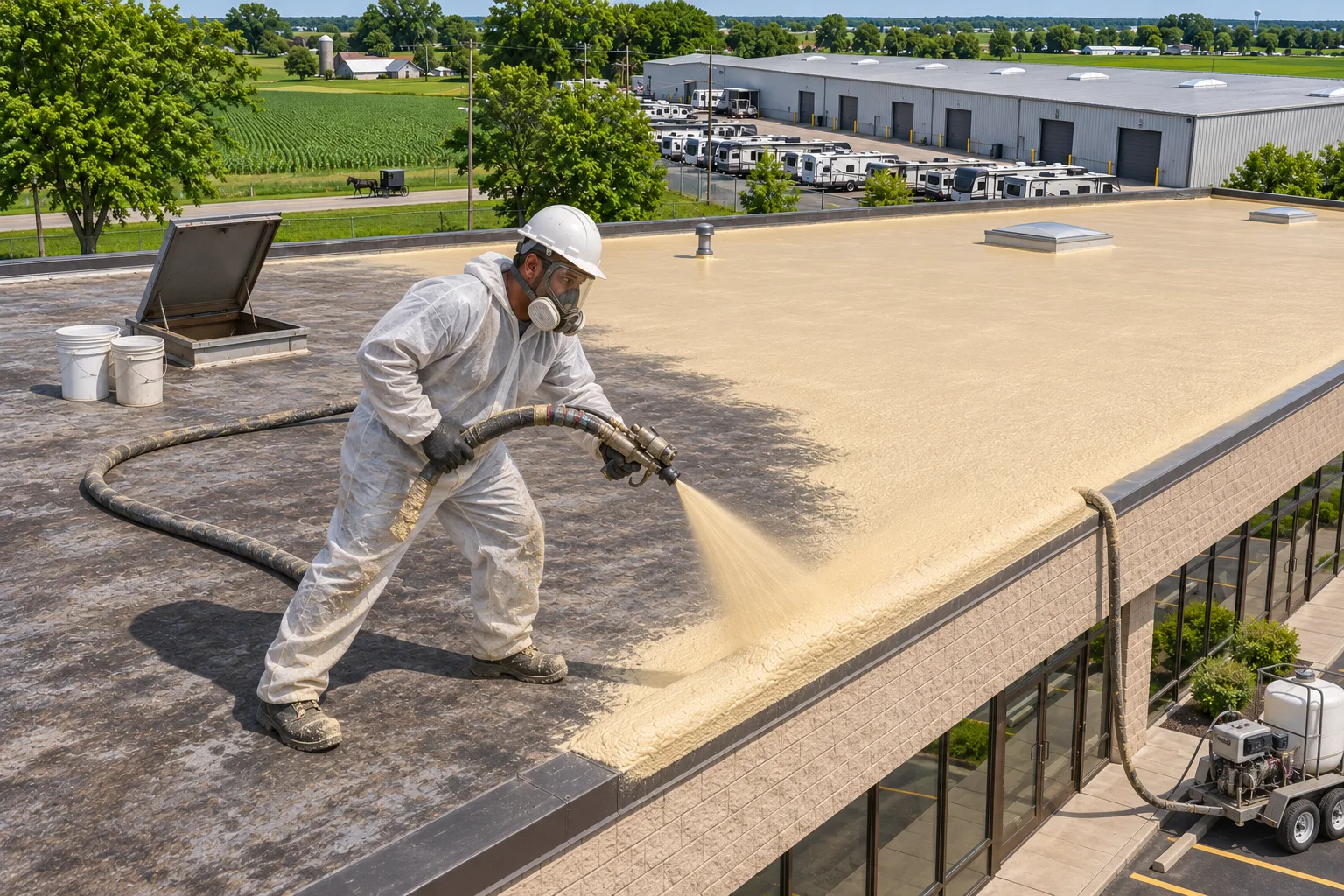
| Spray Foam Roofing | Buildings that need insulation added | Deck moisture by building |
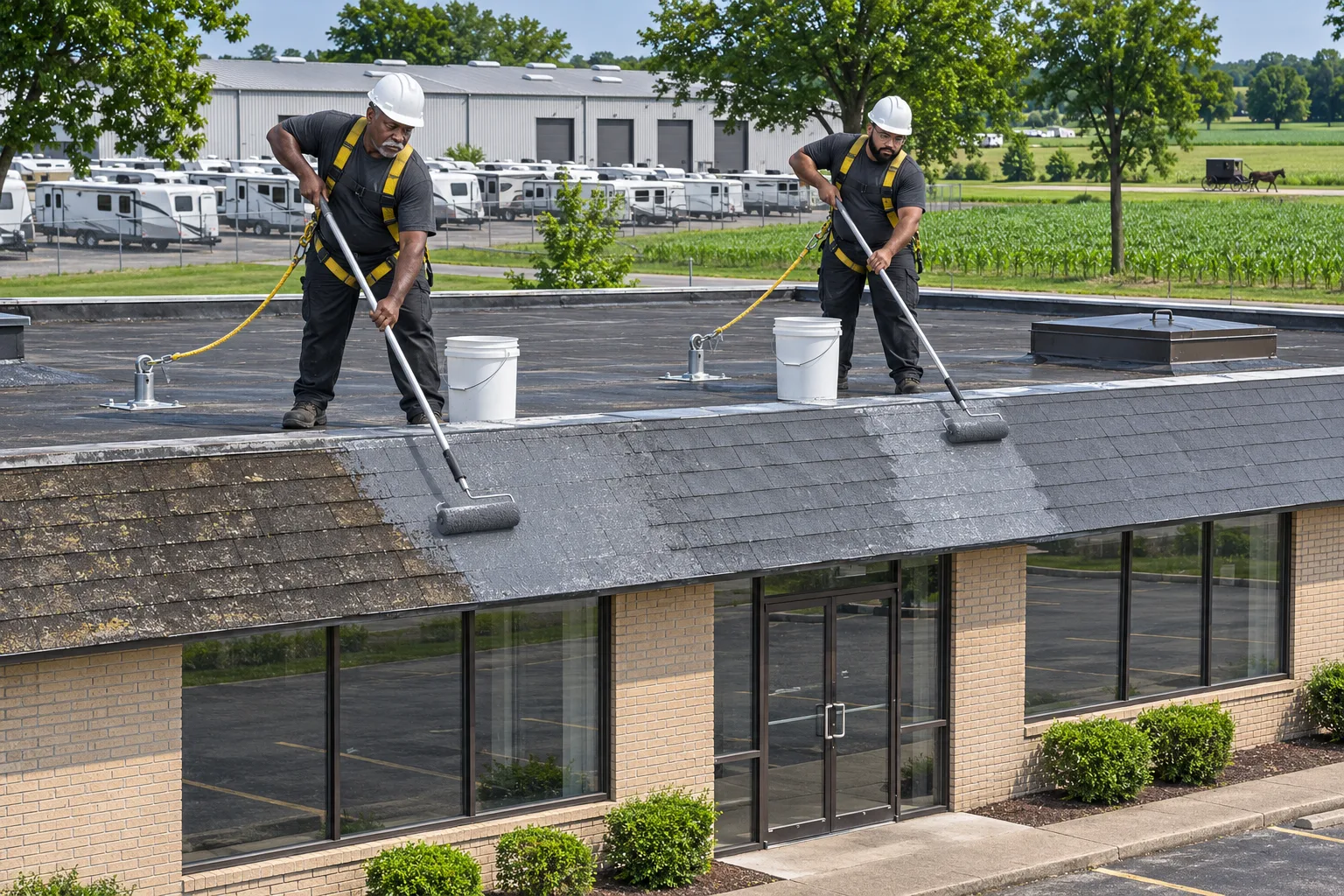
| Shingle Roof Coating | Office fronts with shingle roofs | Flat, sealed tabs |
Send a site plan or aerial photo and mark the roof you worry about most. We will walk the campus and phase the coating work.
Campus jobs follow the same five steps, repeated building by building.
Every building on the property gets walked, with screws, laps, skylights, and transitions logged on photos and each roof ranked by how badly it leaks.
Roofs get grouped into phases by leak risk, production schedule, and budget, so the worst roofs come first and the rest follow in order.
Screws, laps, skylights, and rust on the phase-one roof get repaired, and then the surface is washed so the coating bonds to clean steel.
Coating goes on in measured passes, with wet-film readings logged by section for that building’s file.
Lifts, staging, and material shift to the next roof in the plan, and the finished building gets a walk-through and photo record.
Besides Goshen, we coat commercial metal roofs in Elkhart and four more towns nearby.Building somewhere else? Please call us or send us a message.
Commercial and farm buildings, checked for condensation first.
Columbia City metal roof coating →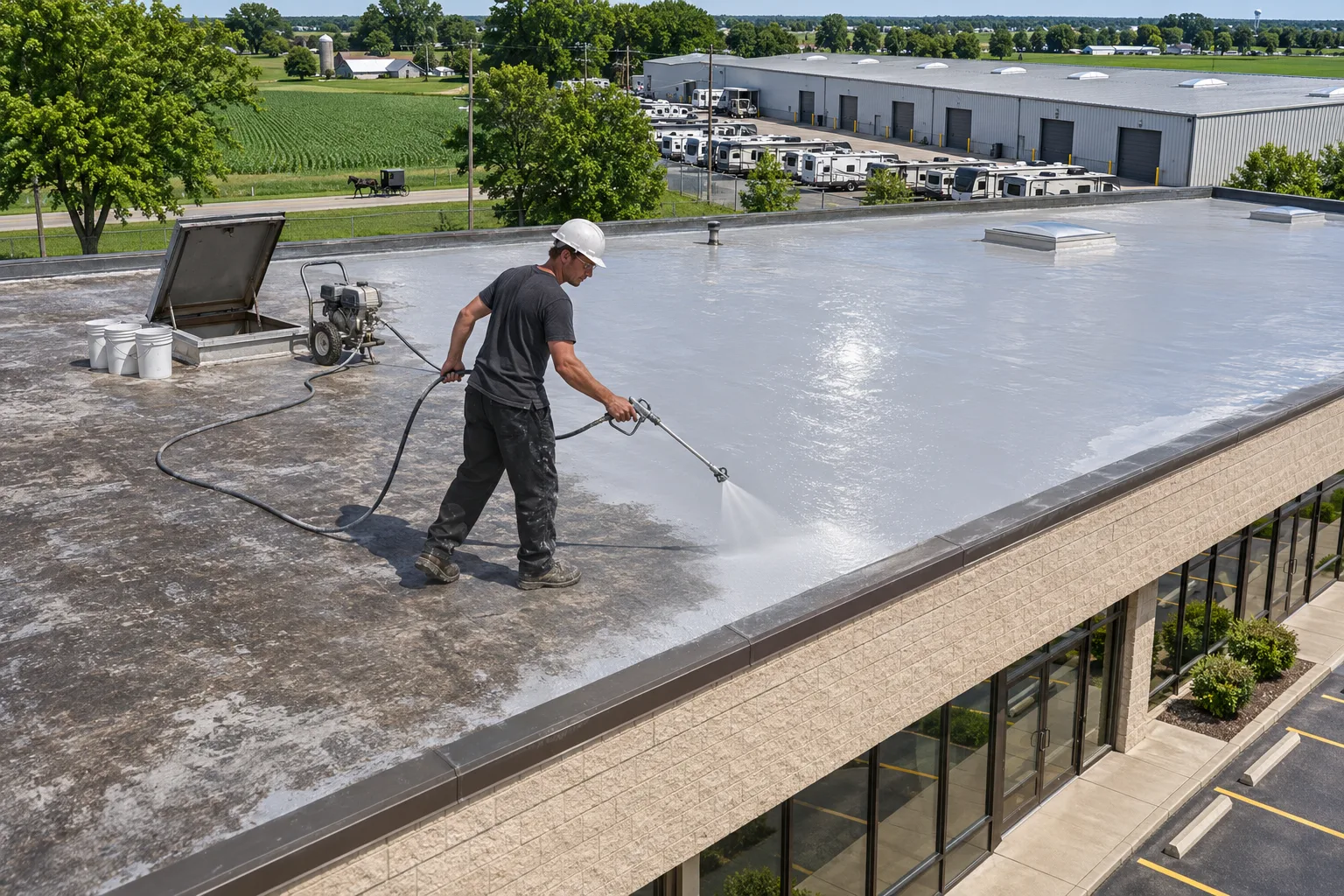
Answers for Goshen plant, storage, and shop owners planning a coating job.
We do, on plants, storage buildings, and shops. Every job opens with a roof walk and moisture check, then washing, rust treatment, screw and seam work, and a coating chosen for each roof's slope. Big roofs get done in sections, so the operation underneath keeps going.
A plant roof falls inside our published range of about $2.50 to $4.00 per square foot for coating, compared with roughly $5 to $8 to replace it. Screw replacement counts, flashing at additions, skylight swaps, and lift access set where a Goshen job lands once the roof has been walked.
It can be. Many Goshen properties have several metal buildings, so we phase the work by leak risk and budget. Each building gets its own scope and record, and the coating system stays consistent across the campus, which keeps later recoats simple.
Storage buildings in Goshen are part of our regular service area. Call with the address and roof size, and we will set up a roof walk that checks screws, eave rust, gutters, and laps before we price a coating.
Transitions between additions get the most attention. Old pieced flashing comes out, new flashing and fabric go in along the step or valley, and those areas carry extra coating thickness before the main field is sprayed or rolled.
Translucent panels stay clear of the coating so they keep letting light into the plant. Cracked or yellowed ones get replaced in the matching profile, and the laps around them get sealed along with the steel.
Send the number of buildings and the roof that leaks most, and we will price a phased coating plan for your Goshen property.