Panels
Spray Foam Roof Over Metal Panels
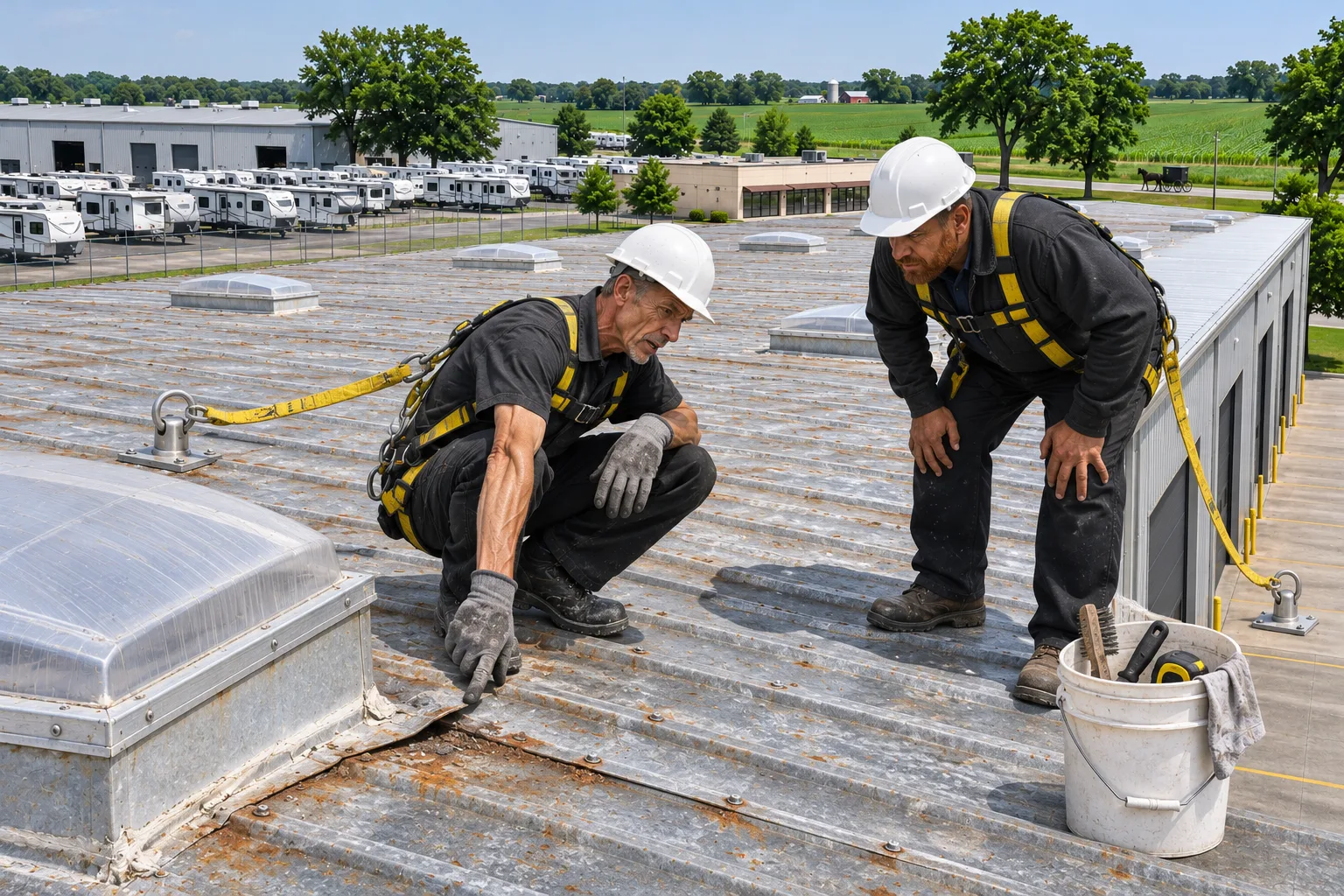
Loose panels flex under foam and crack it later. We secure every panel, replace failed screws, clean and prime the steel, and then foam fills the ribs into one continuous surface.
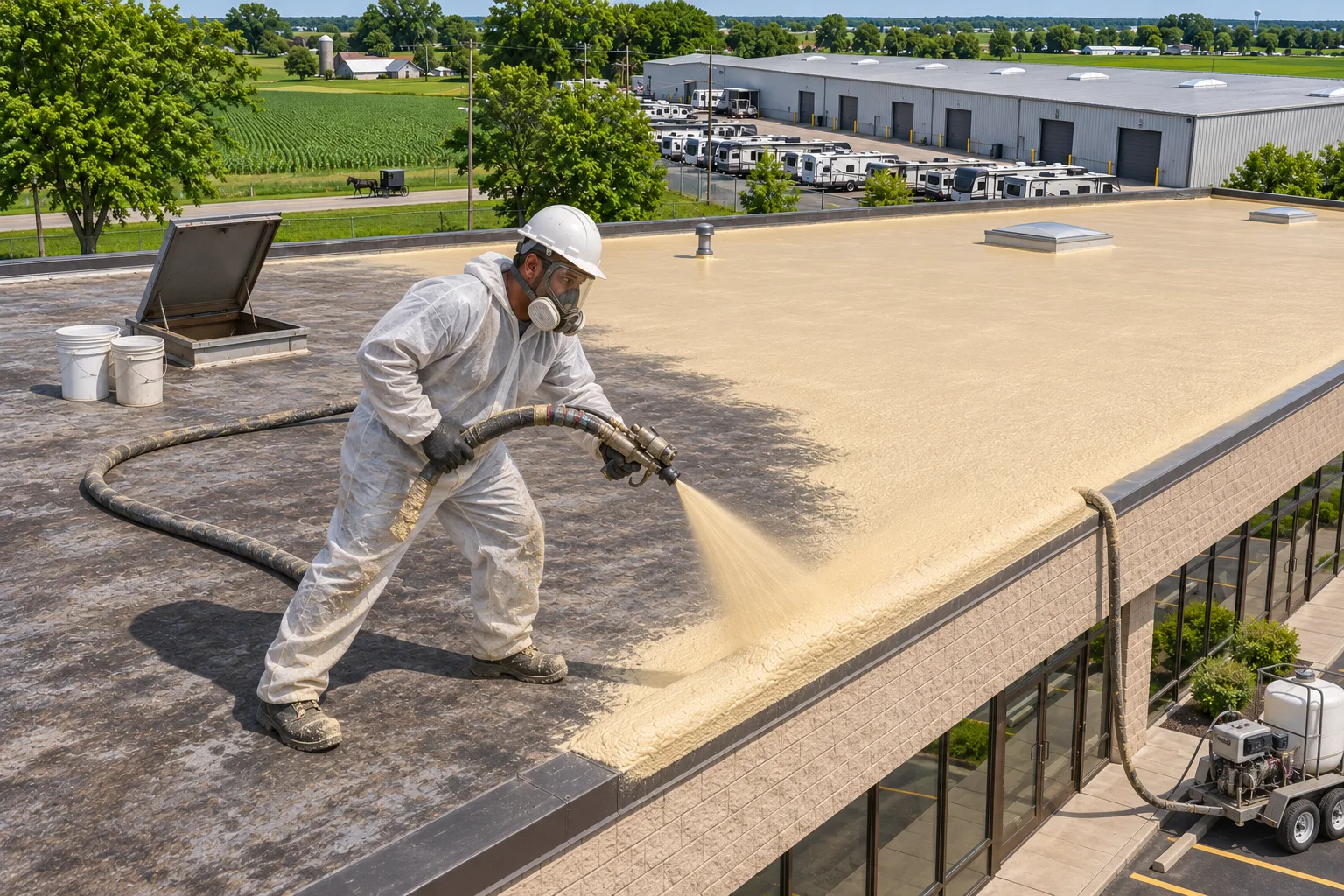
As an Elkhart spray foam roofing contractor, we spray polyurethane foam over dry metal and flat roofs, then protect it with a silicone or acrylic topcoat.
Elkhart spray foam roofing suits large, simple roofs that need insulation or better drainage. The matrix compares it with a coating alone and with a tear-off.
| Roof Condition | Spray Foam | Coating Only | Tear Off First |
|---|---|---|---|
| Panel roof losing heat in winter | Usually Fits | Sometimes | Rarely |
| Low spots that need slope toward drains | Usually Fits | Rarely | Sometimes |
| Insulation wet across large areas | Rarely | Rarely | Usually Fits |
| Roof crowded with units and ductwork | Sometimes | Usually Fits | Rarely |
| Panels fastened tight with surface rust | Usually Fits | Usually Fits | Rarely |
Foam bonds only to a clean, dry, firm surface. These four conditions get handled before the rig starts.
Loose panels flex under foam and crack it later. We secure every panel, replace failed screws, clean and prime the steel, and then foam fills the ribs into one continuous surface.
Foam sprayed over wet insulation traps the water in the roof. Core cuts locate damp areas, which get removed and replaced with dry board before any foam goes down.
Mist from the spray gun travels on a breeze toward cars, windows, and neighbor roofs. Spray days get picked for low wind, and screens go up along edges facing parking lots.
Fresh foam and topcoat can pull odor indoors through unit intakes. We plan shutdowns with your maintenance staff and mask condensers and louvers before spraying.
Foam often covers the main field while other systems handle sections around it on Elkhart buildings.
| System | Where It Fits | Check First |
|---|---|---|
| Commercial Metal Roof Coating | Panel roofs kept as the base under foam | Panel attachment and rust |
| Silicone Roof Coating | Topcoat over foam on low areas | Foam surface cure |
| Acrylic Roof Coating | Topcoat over foam that drains well | Dry window for the topcoat |
| Spray Foam Roofing | Large roofs needing insulation and slope | Deck dryness and foam depth plan |
| Shingle Roof Coating | Office wings with pitched shingle roofs | Shingle flatness |
Foam adds a layer the other systems lack. Its main gain comes first, then three more.
Polyurethane foam goes on top of the existing roof as one fully adhered layer. It adds insulation above the deck and closes the air gaps at panel laps, so the space below loses less heat in winter.
Foam can be sprayed thicker in low spots, which nudges water toward drains on roofs that pond after storms.
Warmer panels leave fewer cold surfaces for moisture to collect under, so drip onto stock and machines tapers off.
Work happens on the roof surface, so the plant, warehouse, or shop below keeps running through the job.
Tell us the roof size and what you notice inside in winter. We will check deck moisture and price foam with a topcoat.
Foam work runs on dry days with low wind, from the first pass to the topcoat.
We test deck and insulation moisture with core cuts, check panel attachment, and map rooftop units, drains, and intakes before setting a foam depth.
Loose panels get fastened, failed screws replaced, and the whole surface washed and primed so the foam has something firm and clean to grab.
Condensers, louvers, and roof edges near parking get masked or screened. Intake shutdowns get confirmed with your maintenance staff.
Passes build foam to the planned depth, thicker where slope toward drains is needed. Depth gets probed across the roof as it cures.
A silicone or acrylic topcoat covers every inch of foam within a day or so of spraying, since sunlight degrades bare foam.
Foam rarely stands alone on a building. These four systems sit beside it or on top of it.
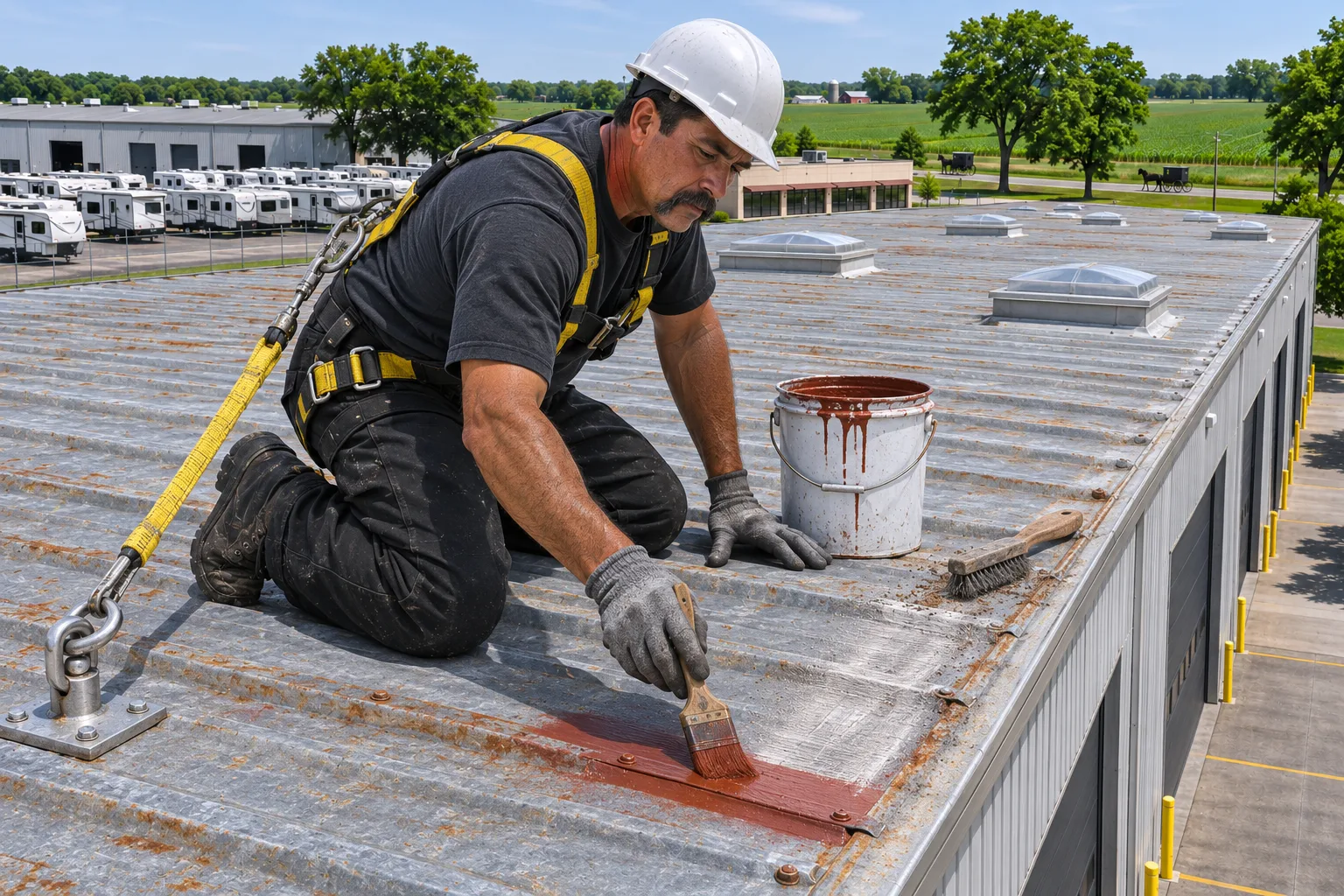
Screw-down and standing seam panels, sealed and coated.
Commercial Metal Roof Coating page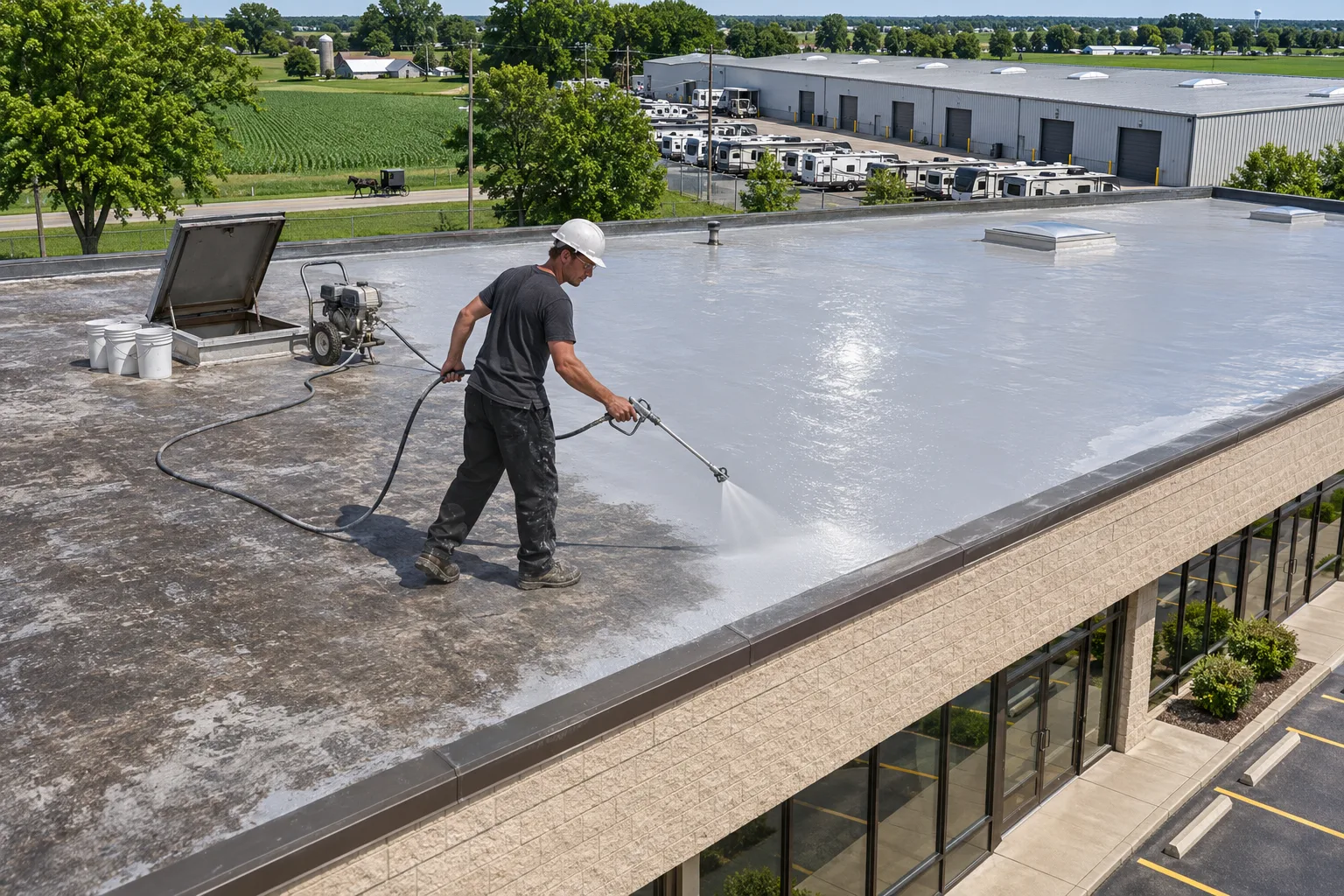
Low, wet sections where rain and snowmelt sit.
Silicone Roof Coating page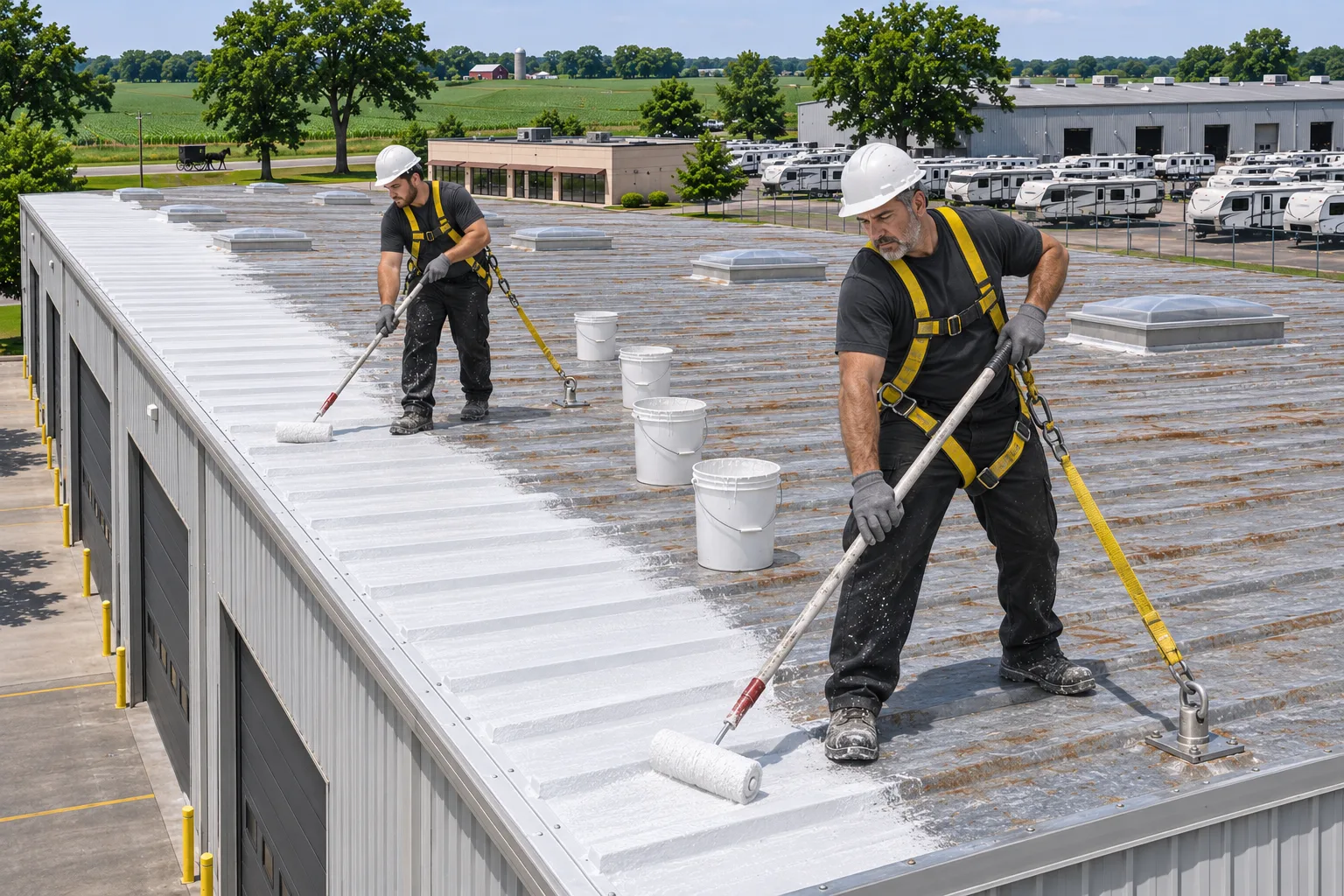
Sloped panels that drain fast, with easy recoats.
Acrylic Roof Coating page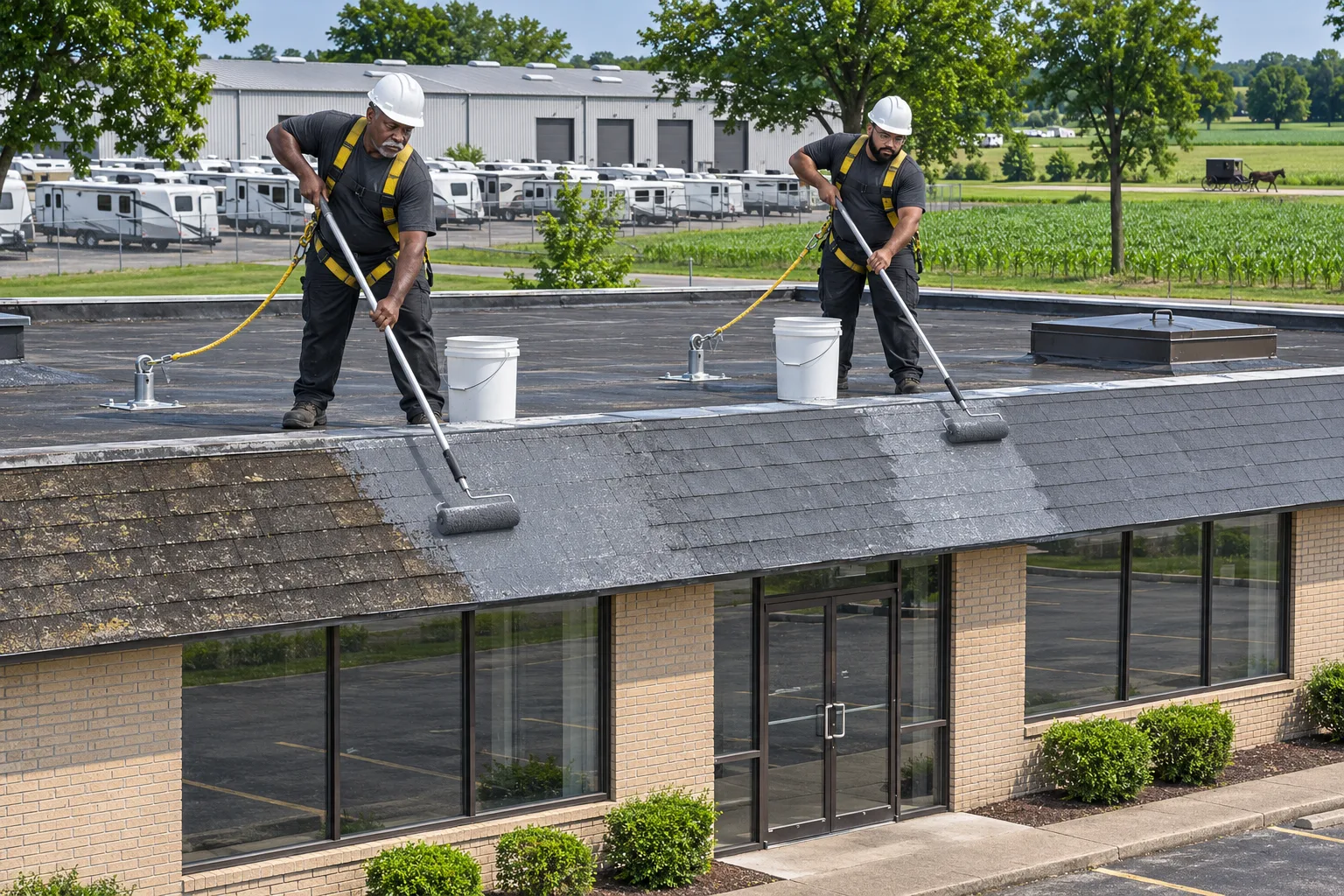
Aged but flat shingles on commercial buildings.
Shingle Roof Coating pageStraight answers on foam for Elkhart plants, warehouses, and shops.
On the plus side, foam leaves no laps, adds insulation, weighs little, and can be shaped to move water toward drains. On the minus side, it needs dry weather and a skilled crew, overspray takes planning, and the topcoat needs upkeep. Large roofs with simple layouts get the most from it.
Weather limits, upkeep, and exposure to damage lead the list. Foam needs a dry, frost-free surface, which shortens the season. The topcoat has to be renewed on schedule or sunlight breaks the foam down. Hail and foot traffic can bruise it, and those spots get repaired before water reaches the foam.
Yes. After the panels are cleaned, primed, and fastened tight, foam is sprayed across the roof, filling the ribs into one continuous surface. A silicone or acrylic topcoat shields it from sunlight. Insulation gets added this way while the metal stays in place and the building stays in use.
It does. Polyurethane foam adds insulation above the deck and closes gaps at panel laps that leak air. Heat loss through the roof drops, and the underside of the panels stays warmer, which cuts condensation. How much it helps turns on the depth applied and the insulation already in place.
Recoating starts with a wash and a close look at the surface. Bruised or wet foam gets cut out and refilled, then a fresh topcoat goes over the whole roof at the specified thickness. Keeping that topcoat intact is what protects foam from sunlight year after year.
Foam jobs run above a coating alone because of the material depth, and the exact number comes after the roof walk. Foam thickness, deck moisture repairs, masking around rooftop units, the topcoat chosen, and roof access set the price. Our ballpark tool gives coating and replacement ranges for comparison.
Send the roof size and what you notice inside in winter, and we will price the foam, topcoat, and prep work.