Fasteners
Fastener Sealing Before Coating
Each screw gets a hand check. Stripped or rusted ones come out, oversized screws with new washers go in, and every head gets capped with brush-grade sealant before the field coat.
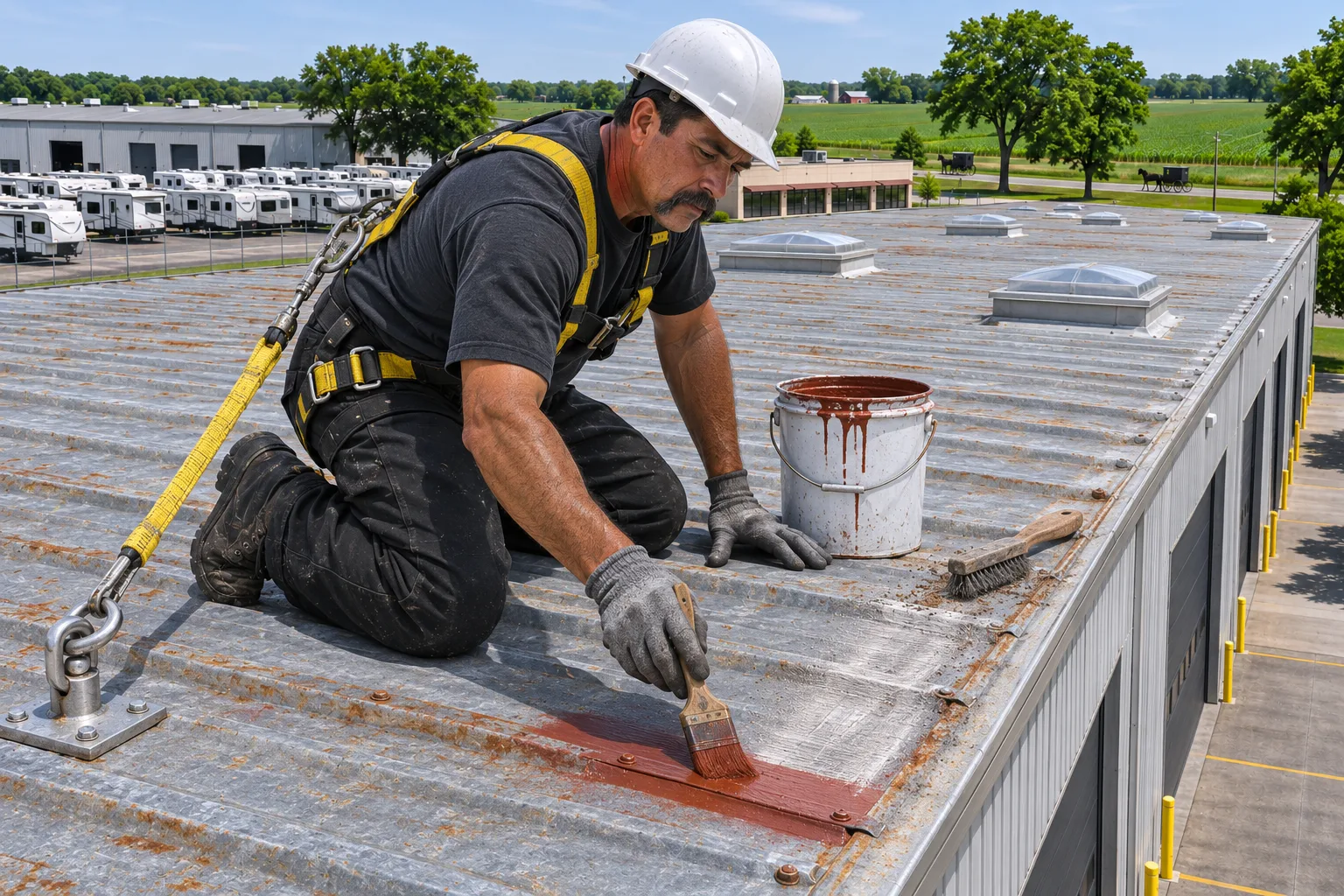
As an Elkhart commercial metal roof coating contractor, we replace failed screws, seal every lap, prime the rust, and coat exposed-fastener and standing seam roofs.
Elkhart commercial metal roof coating fits most panel roofs with surface rust and leaking details. The matrix shows where coating, a panel swap, or replacement fits.
| Roof Condition | Coat After Repairs | Swap Panels, Then Coat | Replace the Roof |
|---|---|---|---|
| Screws loose or washers cracked across the roof | Usually Fits | Sometimes | Rarely |
| Side laps and end laps leaking | Usually Fits | Sometimes | Rarely |
| A few panels rusted through | Sometimes | Usually Fits | Rarely |
| Standing seams with worn seam sealant | Usually Fits | Rarely | Rarely |
| Bent purlins or panels sagging between supports | Rarely | Sometimes | Usually Fits |
Four conditions show up on almost every metal roof we coat in Elkhart. Each one gets fixed before primer goes down.
Each screw gets a hand check. Stripped or rusted ones come out, oversized screws with new washers go in, and every head gets capped with brush-grade sealant before the field coat.
Dented panels can still take a coating. Split seams, cracked sealant, and crushed washers from the storm get repaired first, and insurance documentation wraps up before coating covers the damage.
Panels on long plant roofs slide against each other at the end laps as temperatures swing. We clean each lap, set fabric in base coat, and press it flat across the joint.
Boots crack, and exhaust curbs collect residue that blocks adhesion. We degrease around each one, replace split boots, and build coating up in layers where curb meets panel.
Every system below goes on Elkhart roofs, and the main metal coating often pairs with one of the others on a single building.
| System | Where It Fits | Check First |
|---|---|---|
| Commercial Metal Roof Coating | Exposed-fastener and standing seam panels | Screw count, lap condition, rust depth |
| Silicone Roof Coating | Low-slope bays and gutters holding water | Ponding depth and primer match |
| Acrylic Roof Coating | Sloped panels that drain within hours | Forecast dry stretch and temperature |
| Spray Foam Roofing | Panel roofs needing added insulation | Dry deck and tight panel attachment |
| Shingle Roof Coating | Shingled mansards on plant offices | Shingle flatness and deck firmness |
Here is what coating a metal plant or shop roof does once the repairs underneath are finished.
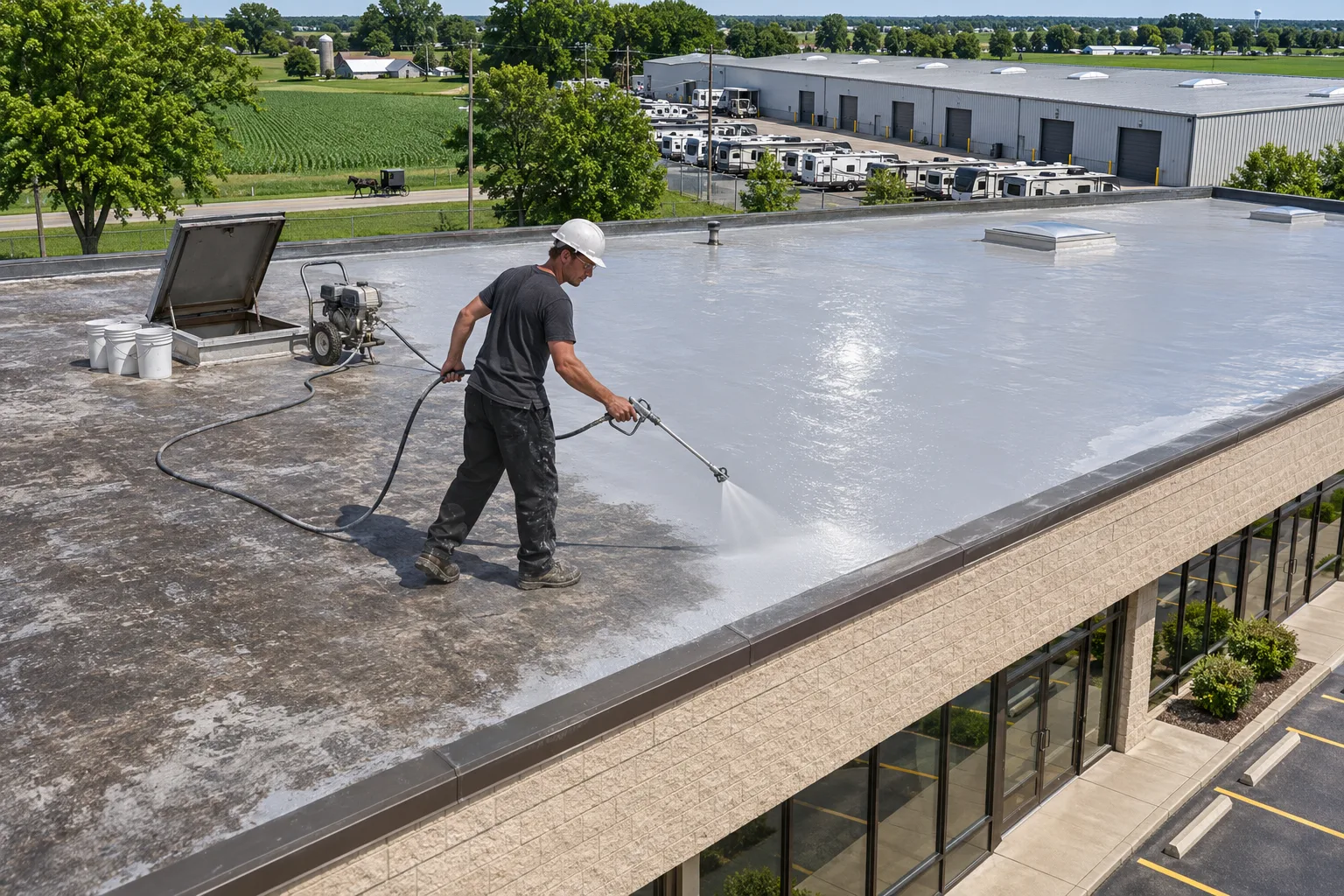
Screws, laps, and curbs are where metal roofs let water in. Coating locks the repairs at each of those details under one film that moves with the panels through Elkhart winters.
Reflective white or light gray finishes keep summer sun off bare panels, cutting the heat that soaks into the space under the deck.
Your roof stays on and closed the whole time, so lines, storage racks, and offices under the work stay covered.
Years later the topcoat gets cleaned and renewed over the same base, which keeps the panels protected without a tear-off.
Send a few photos of the worst panels and the roof size. We will tell you whether coating, a panel swap, or both fits your building.
Order matters on metal. Skipped screw work or a rushed wash is how coatings peel early.
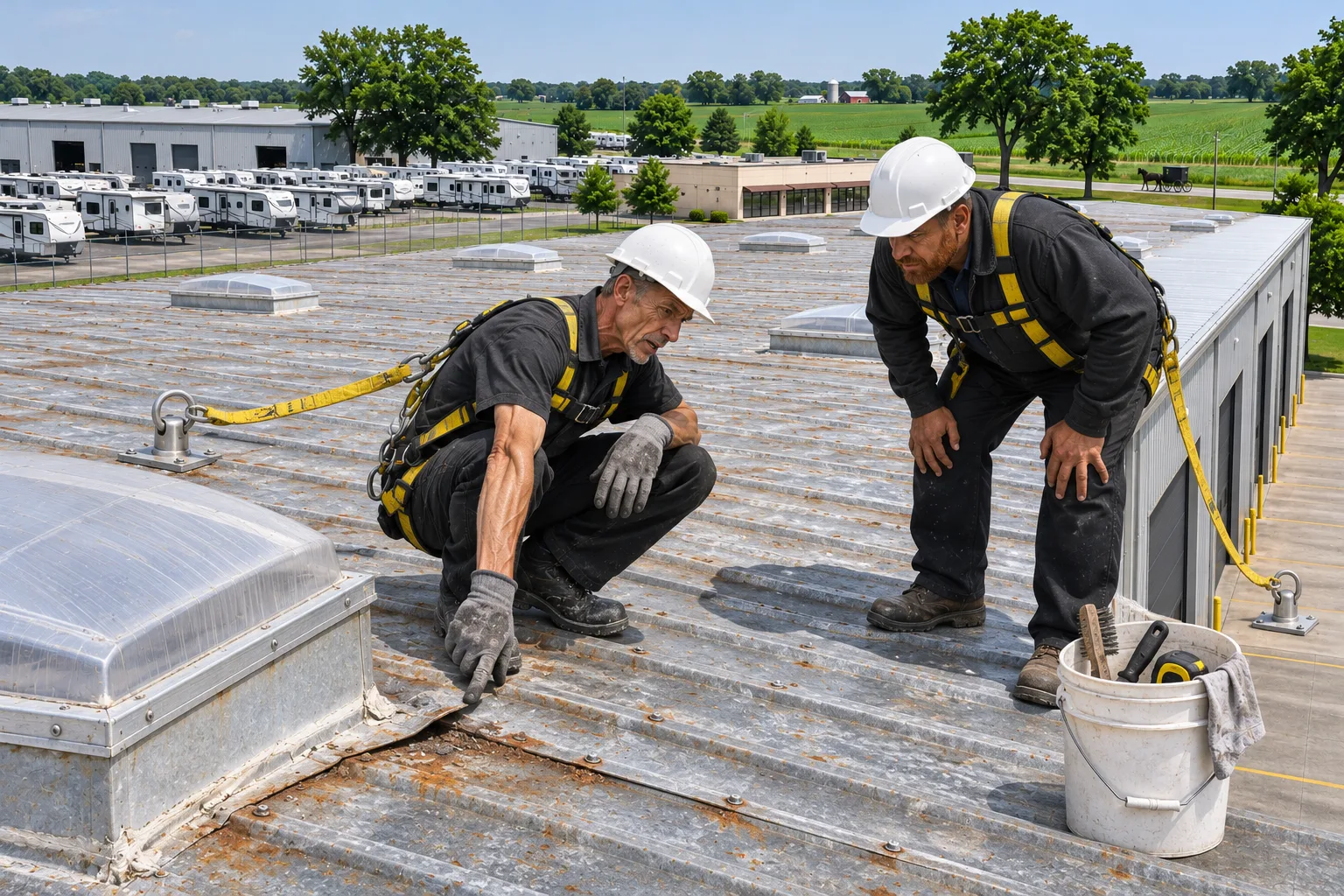
We check every panel run for loose screws, open laps, rust depth, and wet insulation, then mark each repair on photos so the scope is clear before pricing.
Worn screws come out, oversized ones with fresh washers go in, and each head is capped with sealant so it stays tight under the coating.
End laps and side laps are cleaned, then fabric is set in base coat across each joint so panel movement leaves the finish intact.
A pressure wash takes off chalk, dirt, and loose scale. Rust-inhibiting primer goes on bare and rusted steel once the panels dry.
Base and finish coats go on at the thickness the system lists, checked with a wet-film gauge as each section is sprayed or rolled.
Many Elkhart metal roofs use a second system on one section. These four are the usual partners.
Low, wet sections where rain and snowmelt sit.
Silicone Roof Coating page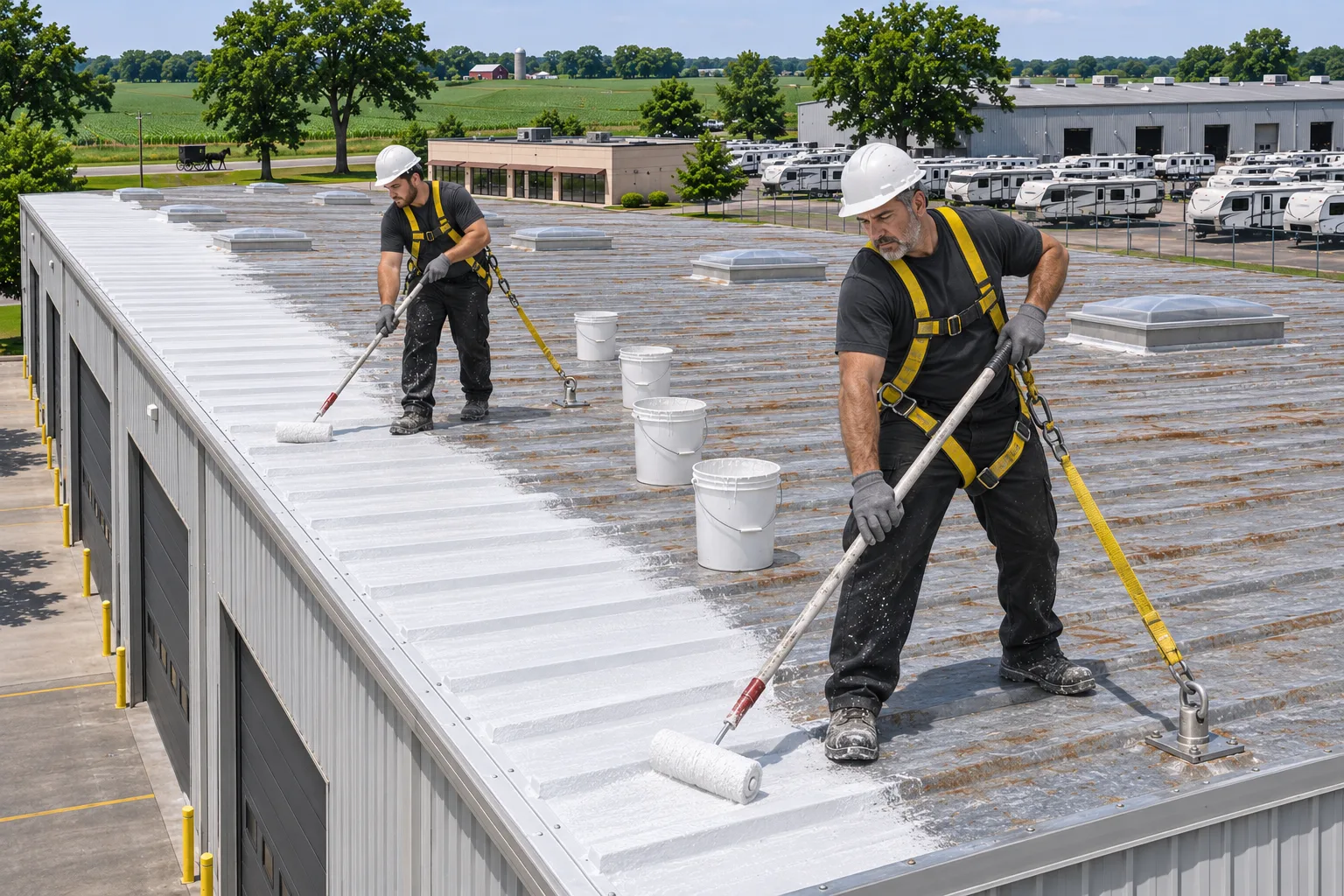
Sloped panels that drain fast, with easy recoats.
Acrylic Roof Coating page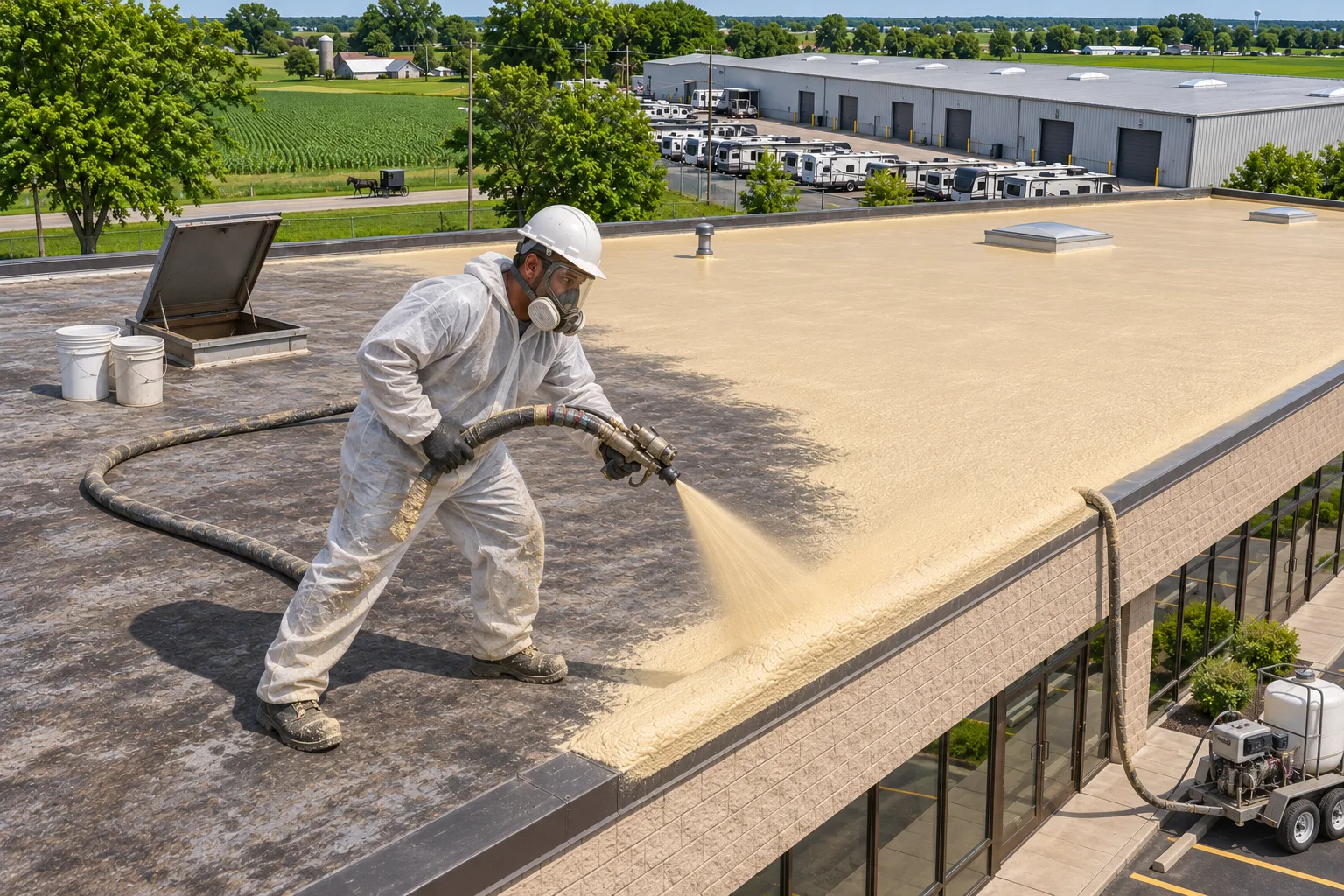
An insulated layer over panels, laps, and screws.
Spray Foam Roofing page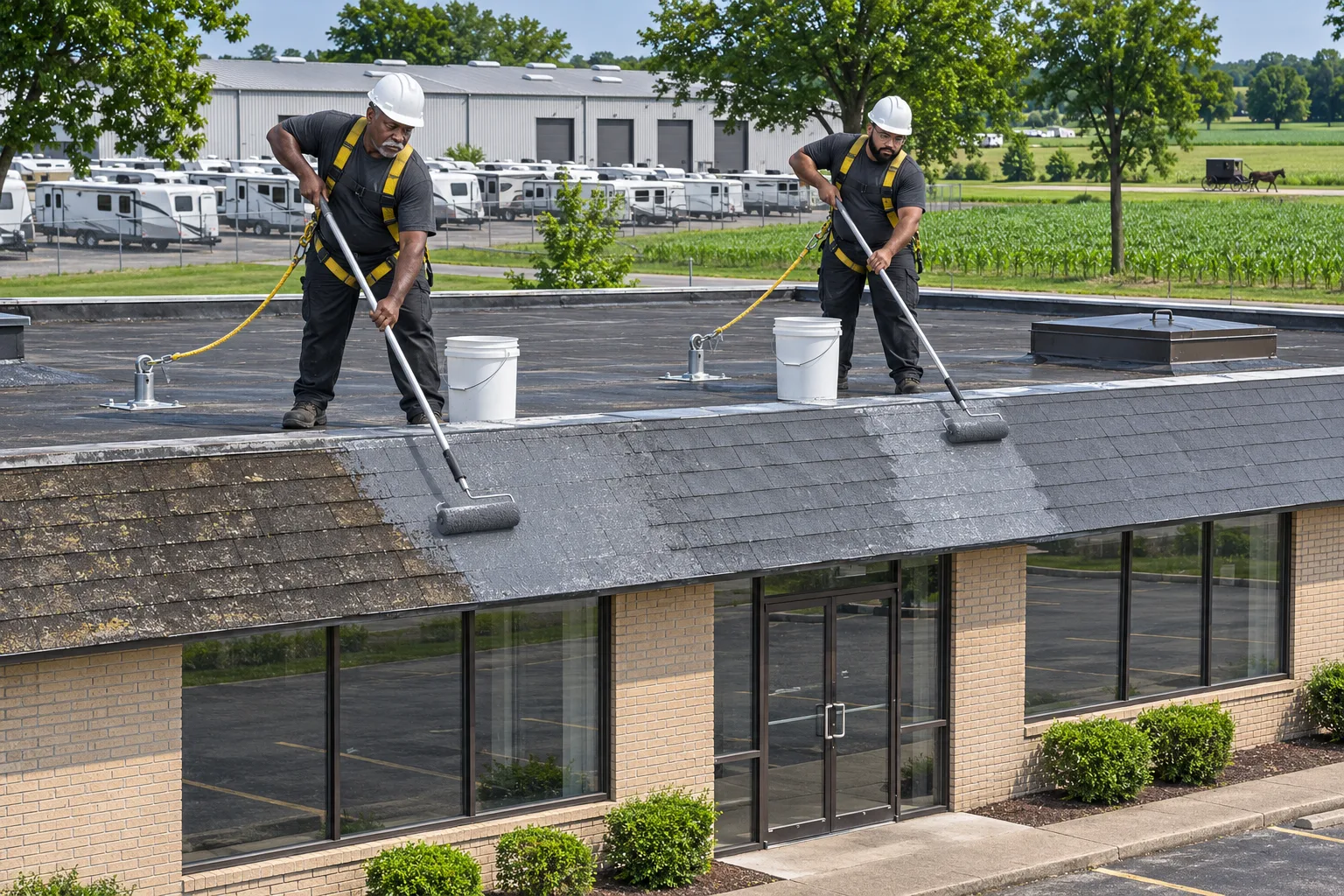
Aged but flat shingles on commercial buildings.
Shingle Roof Coating pageAnswers to what Elkhart owners ask before coating a metal roof on a plant, shop, or warehouse.
Slope and drainage decide it. Acrylic suits sloped panels that shed water fast and costs less per square foot. Silicone suits low-slope runs, gutters, and spots that hold rain or snowmelt. Plenty of light industrial roofs in Elkhart are sloped panels where acrylic fits the field and silicone covers the low areas.
Thickness and prep matter more than the label on the pail. Thicker silicone and high-solids systems tend to carry the longest manufacturer-published ranges, but only over clean, primed steel with every lap sealed. Thin spots near seams or skipped screw work cut any system short, so we gauge wet film while applying.
Screws are where most metal roofs start leaking. Freeze-thaw cycles and daily panel movement back them out and crack their washers. We replace loose, stripped, or rusted screws with larger ones and fresh washers, then cap every head with sealant or brush-grade coating before the main coat.
Frequently, yes. Dents alone rarely rule out a coating, but split seams, cracked sealant, and damaged screws need repair first. We photograph the damage, fix the details, and then coat. If hail punched through panels or an insurance claim is open, documentation wraps up before any coating covers the evidence.
Crews work entirely from the roof surface, so production continues below. We coordinate with the plant on rooftop air intakes, since fresh coating can pull odor inside, and we move around exhaust and dust-collection equipment in sections. Spray days get picked for low wind so overspray stays on the roof.
It turns on scope. The City of Elkhart Permit Center takes building permit applications, and roofing is one of the stages its inspections cover. We confirm with the Permit Center before work starts; jobs that replace panels, decking, or insulation are the likelier ones to need a permit.
Send the roof size and your worst leak spots, and we will price the screw work, lap repairs, and coating for your building.