Exhaust
Residue Around Exhaust Stacks
Oily or dusty exhaust settles on the panels downwind of each stack. Coating will not stick to it, so those areas get degreased and test-patched before any primer goes on.
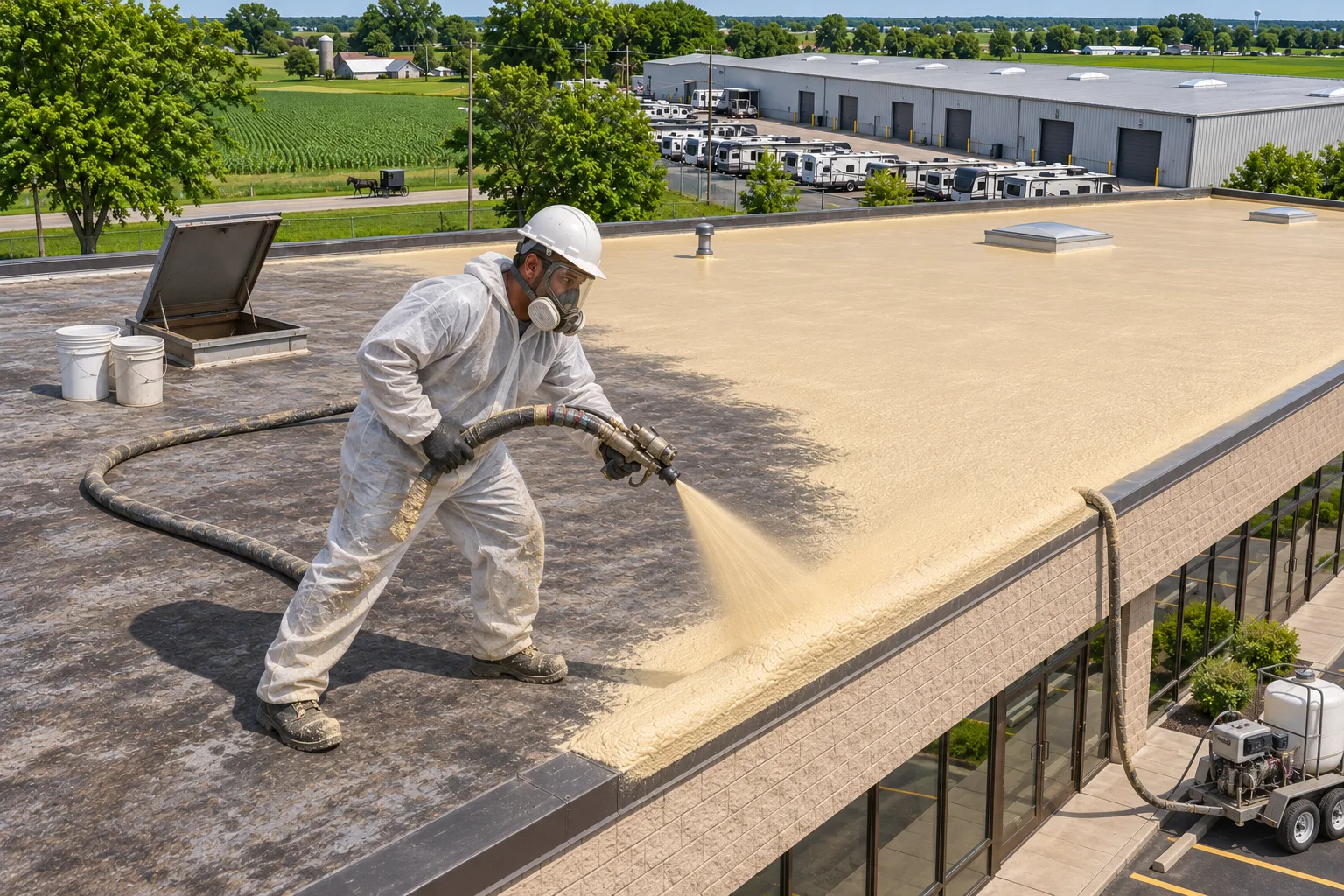
As a Warsaw metal roof coating contractor, we seal curbs, exhaust stacks, and equipment supports first, then coat industrial metal roofs around the machinery.
Warsaw metal roof coating jobs on industrial buildings revolve around what is bolted to the roof.
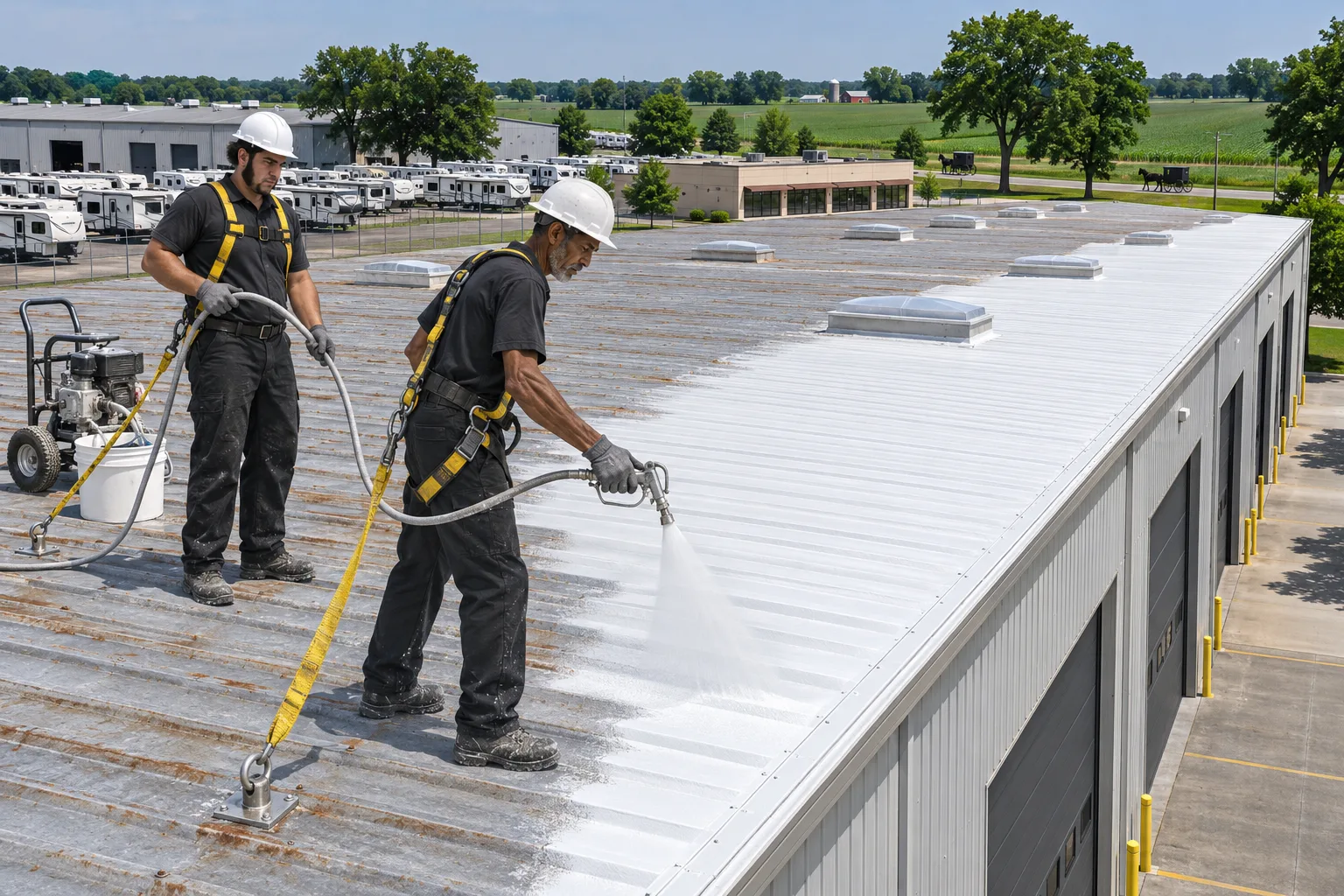
Industrial roofs in Warsaw carry exhaust fans, makeup air units, dust collectors, and pipe supports, and each one is a hole in the roof. Residue from exhaust also settles on the panels around stacks, where it blocks adhesion.
We clean, flash, and reinforce every penetration first, then coat the field around them in sections that line up with your equipment shutdowns.
These four show up on nearly every Warsaw industrial roof we walk, usually within a few feet of a unit.
Oily or dusty exhaust settles on the panels downwind of each stack. Coating will not stick to it, so those areas get degreased and test-patched before any primer goes on.
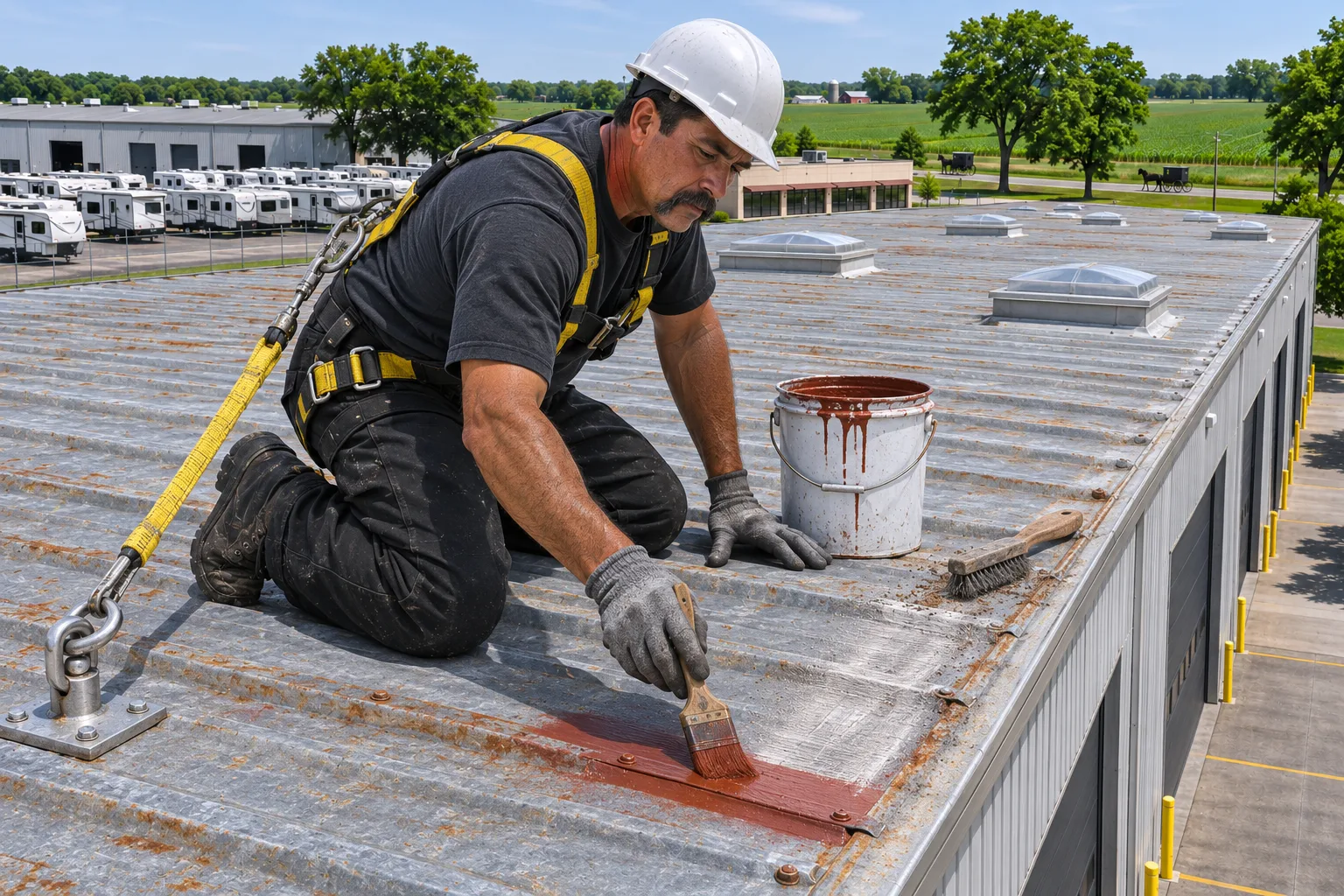
Vibration from fans and units works curb flashing loose over the years. We refasten, reseal, and wrap each curb with fabric set in base coat before the field.
Service techs wear paths across the panels to reach units. Those lanes get extra coating thickness or walkway pads so foot traffic stays off the finish.
Pipe and duct supports resting on bare steel rust the spots beneath them. We lift, clean, and prime those points and set new pads before coating.
Around equipment, coating protects the details that leak most. The main gain comes first, then three more.
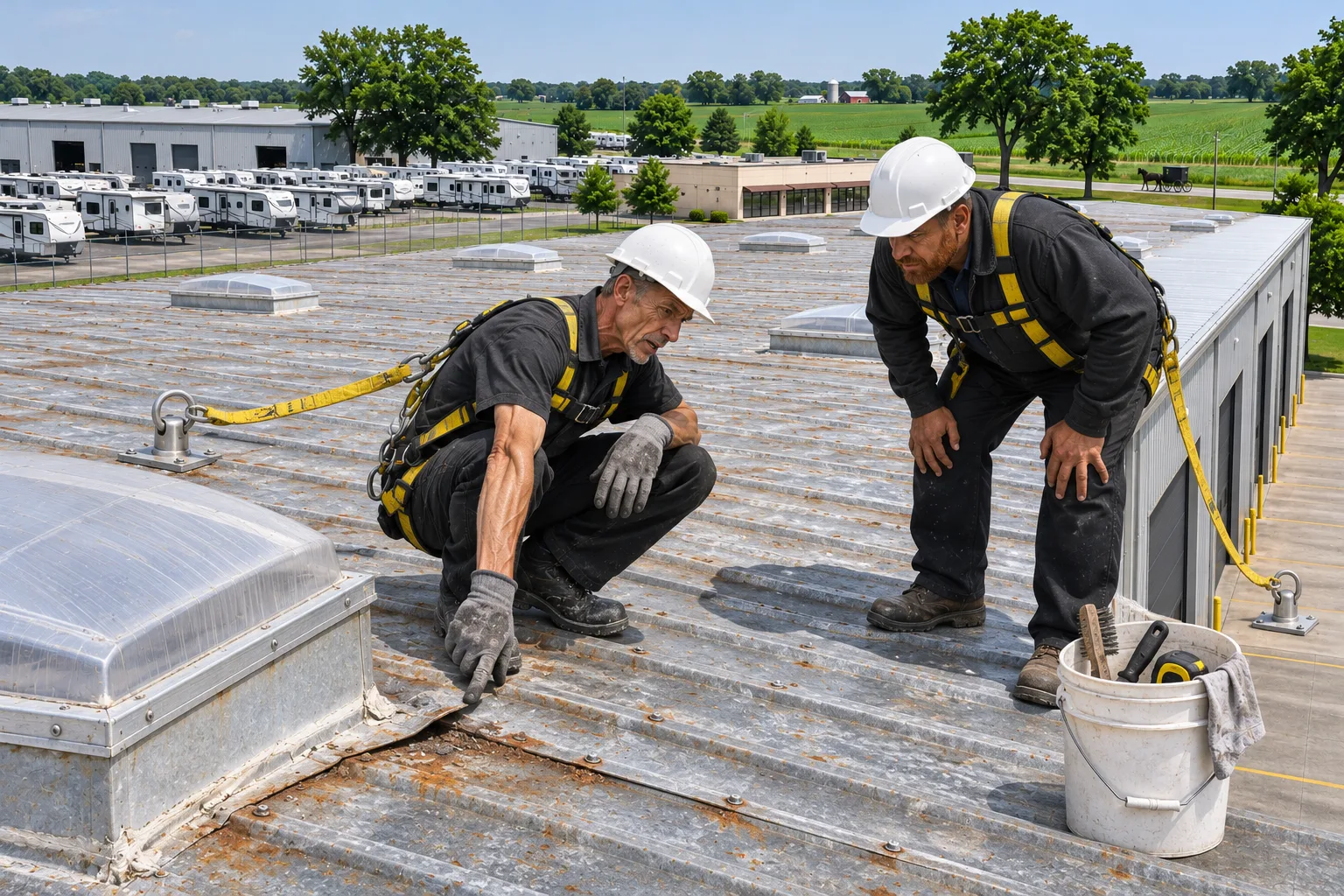
Every curb, stack, and support becomes part of one coated surface instead of a separate patch. Water running toward equipment meets reinforced flashing rather than an open gap.
Walkway pads or extra thickness along service paths keep technicians from wearing through the coating.
Degreasing and test patches near exhaust confirm the coating will bond before the full field goes on.
Sections get coated around planned shutdowns, so critical exhaust and air units run on their normal schedule.
Warsaw industrial roofs often need two systems. This table shows where each one goes.
| System | Where It Fits | Check First |
|---|---|---|
| Commercial Metal Roof Coating | Plant roofs with many penetrations | Curb and stack condition |
| Silicone Roof Coating | Low areas around unit curbs | Water at curb bases |
| Acrylic Roof Coating | Sloped wings with few units | Exhaust residue nearby |
| Spray Foam Roofing | Roofs needing insulation over the plant floor | Equipment clearances |
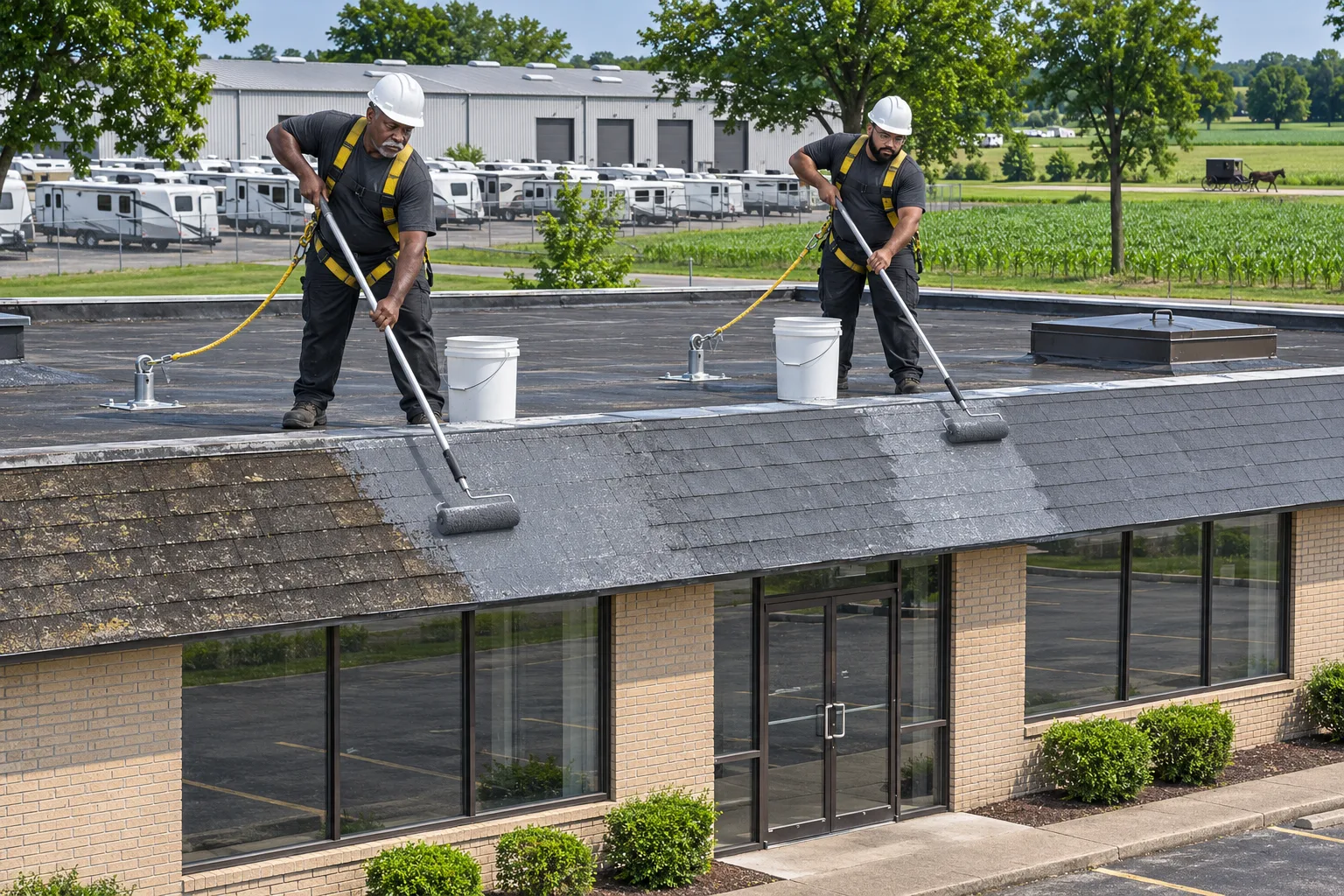
| Shingle Roof Coating | Front offices with shingle roofs | Flashing at walls |
Send a photo of the unit and the stain below it. We will check the curb flashing and price that repair with the coating.
Equipment shutdowns shape the schedule, so we plan them in step two.
We walk the panels and every penetration, test residue near exhaust stacks, check curb flashing, and list which units can go offline and when.
Your maintenance team and our crew agree on which units go offline and when, and intakes near each spray zone get scheduled around production.
Residue gets degreased, curbs and stacks get new flashing and fabric, and supports get lifted, primed, and reset on pads.
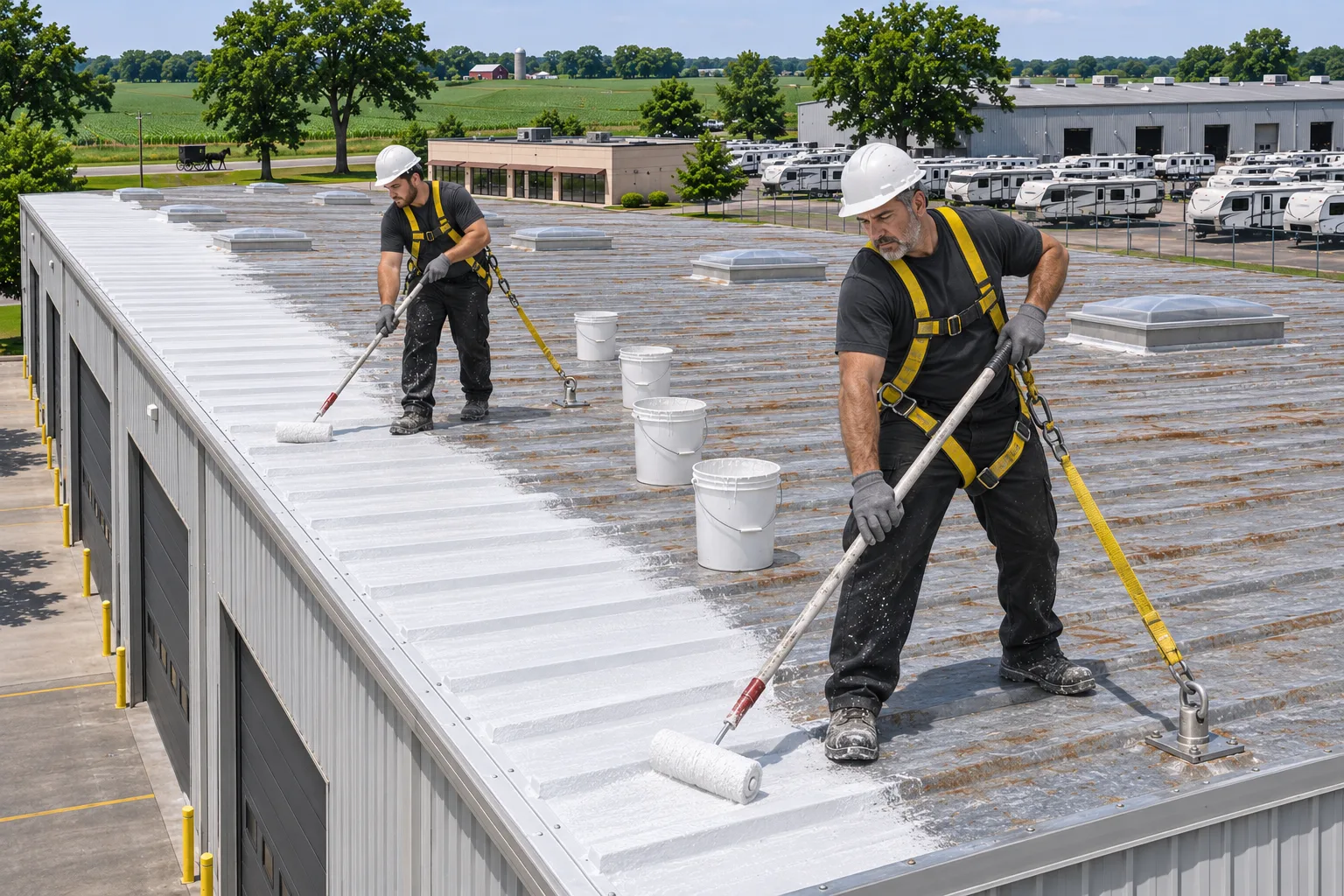
The field gets coated in sections between equipment, with wet-film checks in each and extra thickness along service paths.
Units come back online after the coating sets. A final walk checks every curb, and you get photos and readings for the file.
Beyond Warsaw, we coat commercial metal roofs in Elkhart and four other towns nearby.Your plant is somewhere else? Please call us or send us a message.
Commercial and farm buildings, checked for condensation first.
Columbia City metal roof coating →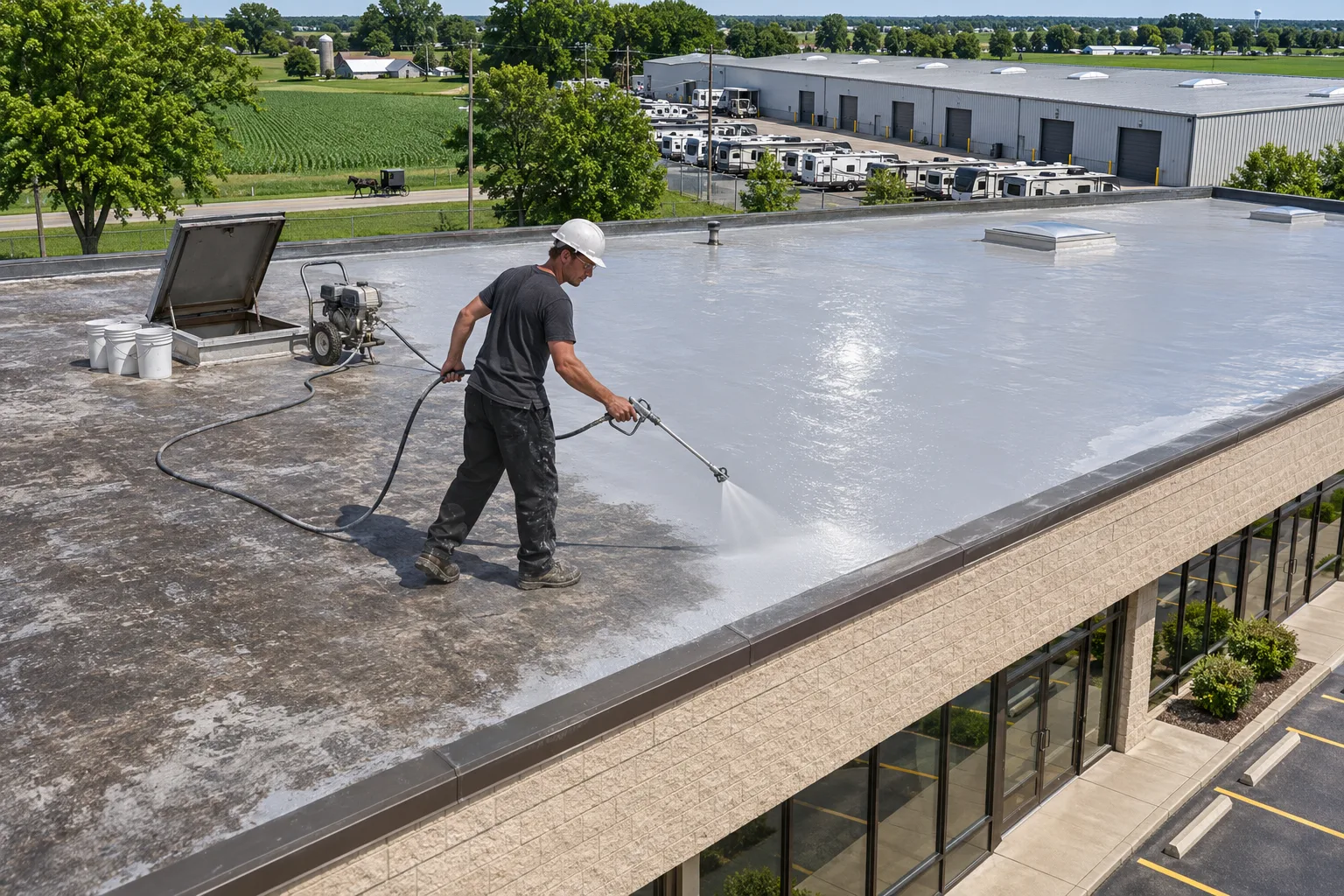
Answers for Warsaw plant and facility managers weighing a coating job.
Yes, Warsaw is part of our service area. Industrial metal roofs there get a full roof walk first, with close attention to exhaust vents and rooftop equipment that can affect adhesion. Failed screws get replaced, laps and penetrations get sealed, and coating goes on in sections around the plant schedule.
It is, as long as each penetration gets proper flashing first. Roofs crowded with units take longer per square foot, because crews work around curbs, stacks, and supports. That extra detail work is where most of the leak protection on an industrial roof comes from, and we price it line by line.
Warsaw plants sit inside our regular service area. Call or send a message with the address, the roof size, and a photo of the equipment layout, and we will schedule a roof walk that covers every curb and stack. Bring any past repair records, since they show which curbs have leaked before.
Sections of the roof get scheduled around your planned maintenance windows. Intakes near each spray zone close by agreement with your staff, and units come back online once the coating around them has set. Most sections can be finished between two planned shutdowns.
Degreasing comes first. Panels near stacks get cleaned with a degreaser and rinsed, then a test patch confirms the coating bonds before the full area gets primed and coated. Heavy buildup near process exhaust can take two cleaning rounds before the test patch passes.
Where techs walk often, pads go down after the coating cures, set in a compatible adhesive. On lighter paths, extra coating thickness along that path does the same job for less. Pads also show newcomers where to walk.
Send the roof size and a photo of the equipment layout, and we will price the penetration work and coating for your Warsaw plant.