Ponding
Silicone Coating Over Ponding Water
Standing water won't soften cured silicone the way it breaks down acrylic. The surface still has to be bone-dry while coating, and water that sits for days gets a drain repair or tapered fill first.
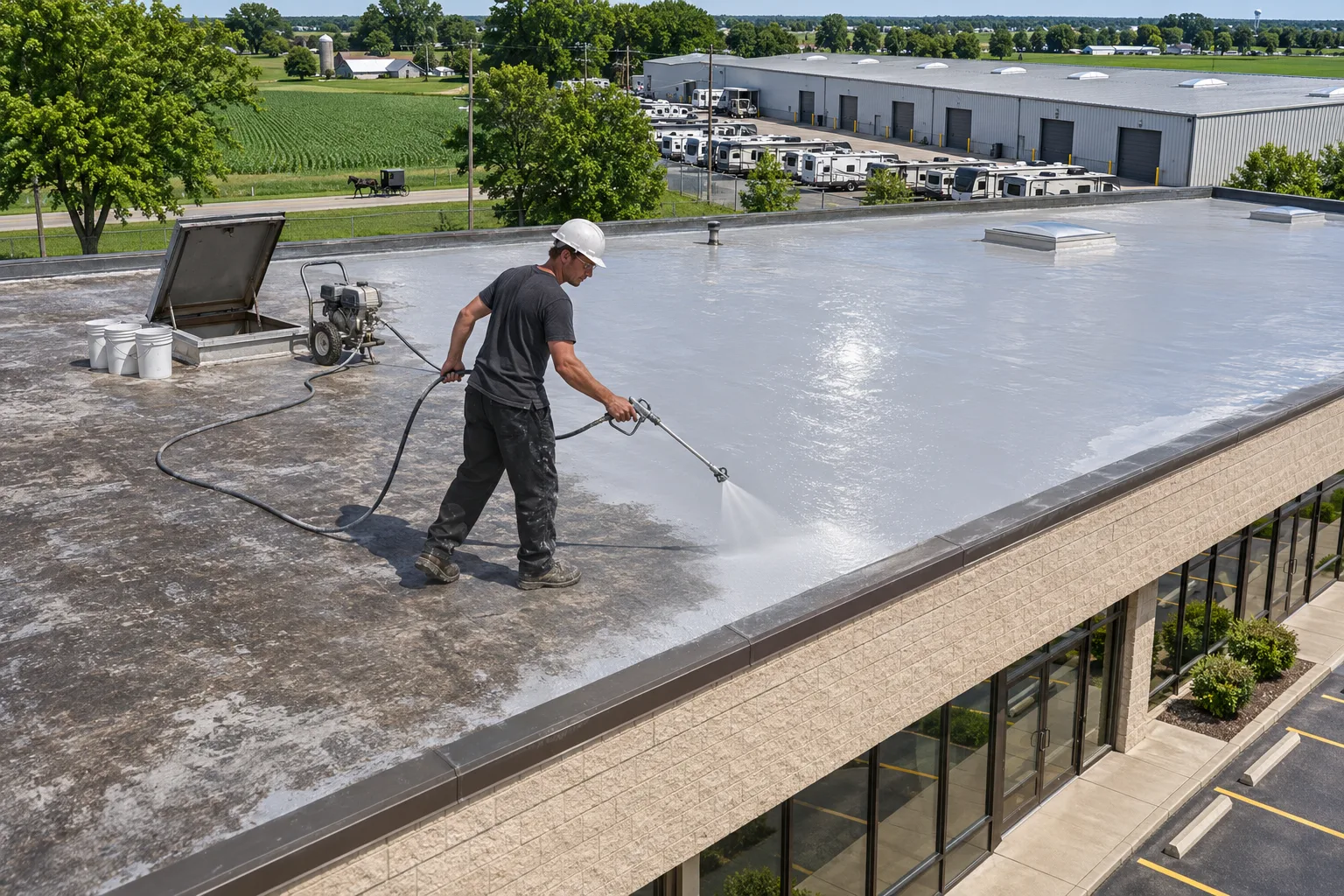
As an Elkhart silicone roof coating contractor, we coat low-slope metal and flat commercial roofs where water lingers after storms and spring melt.
Elkhart silicone roof coating earns its place on low, wet sections. The matrix compares it with acrylic and with fixing the drainage first.
| Roof Condition | Silicone | Acrylic | Fix Drainage First |
|---|---|---|---|
| Water standing a day or two after rain | Usually Fits | Rarely | Sometimes |
| Water still standing after several dry days | Sometimes | Rarely | Usually Fits |
| Sloped panels that drain within hours | Sometimes | Usually Fits | Rarely |
| Gutters and valleys that stay wet | Usually Fits | Rarely | Sometimes |
| Busy service paths to rooftop units | Sometimes | Sometimes | Rarely |
Silicone handles water well, yet it leaves the problems under it in place. These four get repaired before the first pass.
Standing water won't soften cured silicone the way it breaks down acrylic. The surface still has to be bone-dry while coating, and water that sits for days gets a drain repair or tapered fill first.
Leaves, grit, and old patching narrow drain openings until water backs up across the field. We clear each drain, reset clamping rings, and seal scupper edges before coating near them.
Low areas soak the insulation beneath them over time. Core cuts and a moisture meter find the wet sections, which get cut out and replaced so silicone goes over a dry roof.
Rooftop unit curbs sit in the path of draining water. Their flashing gets resealed and reinforced with fabric, then built up with extra silicone at the base.
Silicone often shares a roof with another system in Elkhart. This table shows where each one goes.
| System | Where It Fits | Check First |
|---|---|---|
| Commercial Metal Roof Coating | Screw-down panels with surface rust | Fastener count and lap condition |
| Silicone Roof Coating | Low bays, gutters, and curb bases | Ponding depth after two dry days |
| Acrylic Roof Coating | Sloped sections that shed water | Silicone-free surface for bonding |
| Spray Foam Roofing | Roofs needing slope built toward drains | Foam thickness at low spots |
| Shingle Roof Coating | Pitched sections over offices | Shingle condition and deck feel |
Silicone pays off most on the wet, low parts of a roof. The main gain comes first, then three more.
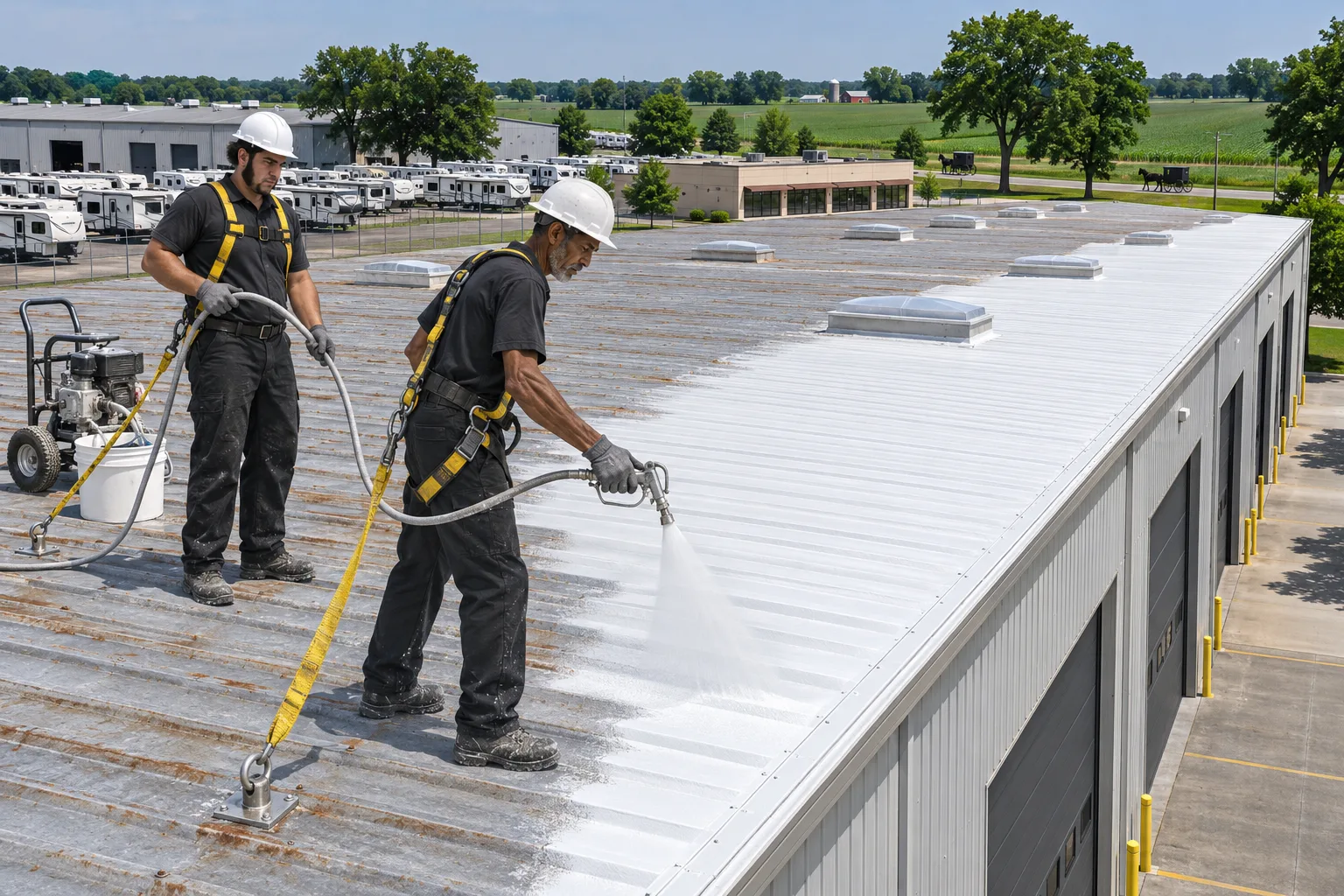
Silicone keeps its film when water stands on it after a storm or during spring melt. Sections that used to leak after every heavy rain stay closed between drainage repairs and recoats.
Silicone resists UV and stays flexible through Indiana cold snaps, so it moves with metal panels without cracking at the laps.
High-solids silicone builds thickness in one or two passes, which shortens the number of dry days the work needs.
Future recoats use silicone over silicone. We write that into your roof file so the next crew knows exactly what is up there.
Send a photo of the low area and how long the water stays. We will look at the drains and price silicone for that section.
Silicone work is mostly drying, cleaning, and drain repair before the coating itself goes down.
We map ponding areas, test the existing surface for adhesion, and take core cuts at low spots to find any wet insulation before writing the scope.
Clogged drains get cleared, clamping rings reset, and deep ponds get tapered fill so water moves off the roof between storms.
Pressure washing removes dirt and chalk. Bleed-blocking or rust primer goes where the substrate calls for it, matched to the silicone system.
Seams, curbs, and drain bowls get fabric set in silicone so the details carry extra thickness before the field goes on.
One or two silicone passes go on at the specified thickness. A wet-film gauge checks each section, low spots first.
Silicone rarely covers a whole Elkhart metal roof by itself. These four handle the remaining sections.
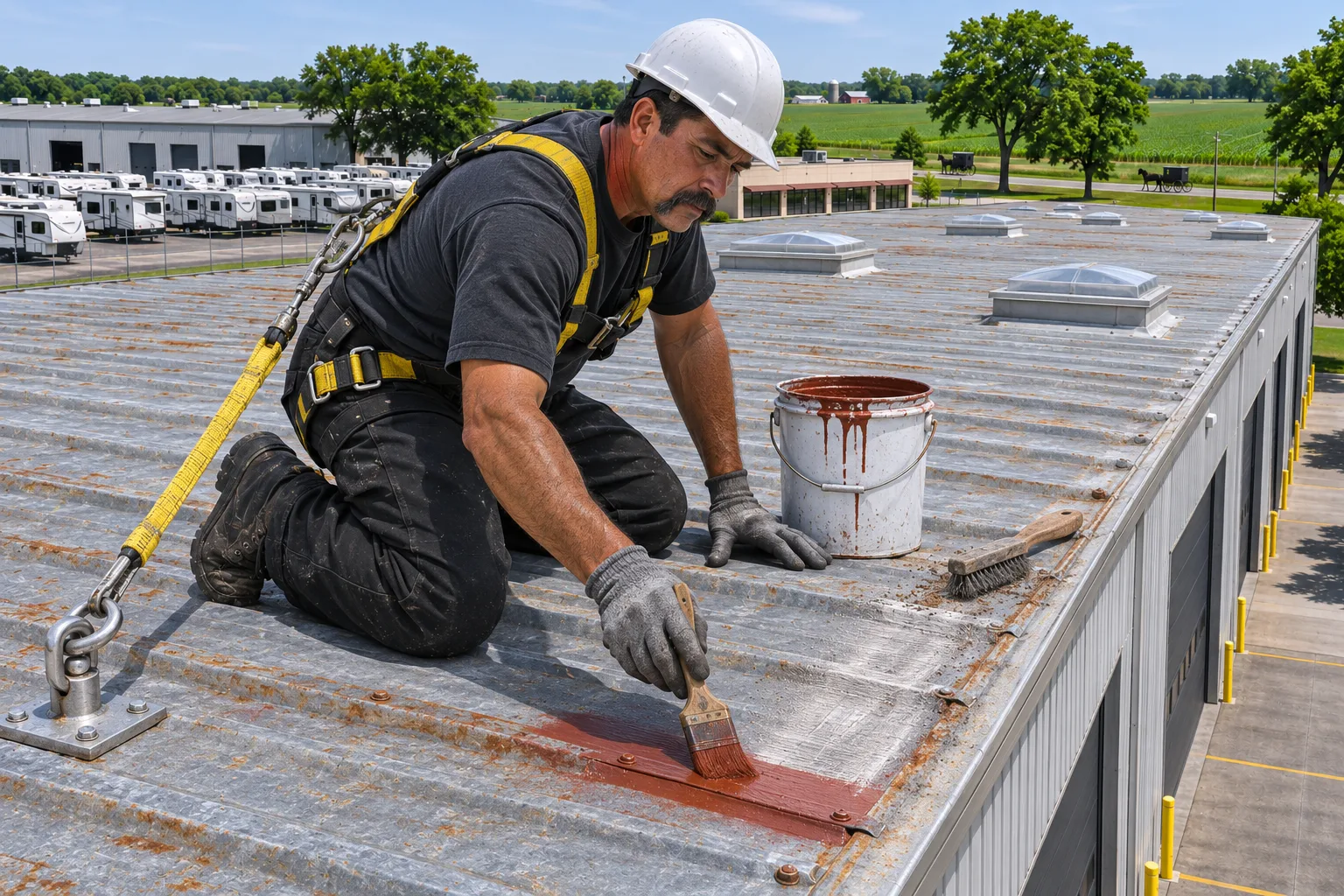
Screw-down and standing seam panels, sealed and coated.
Commercial Metal Roof Coating page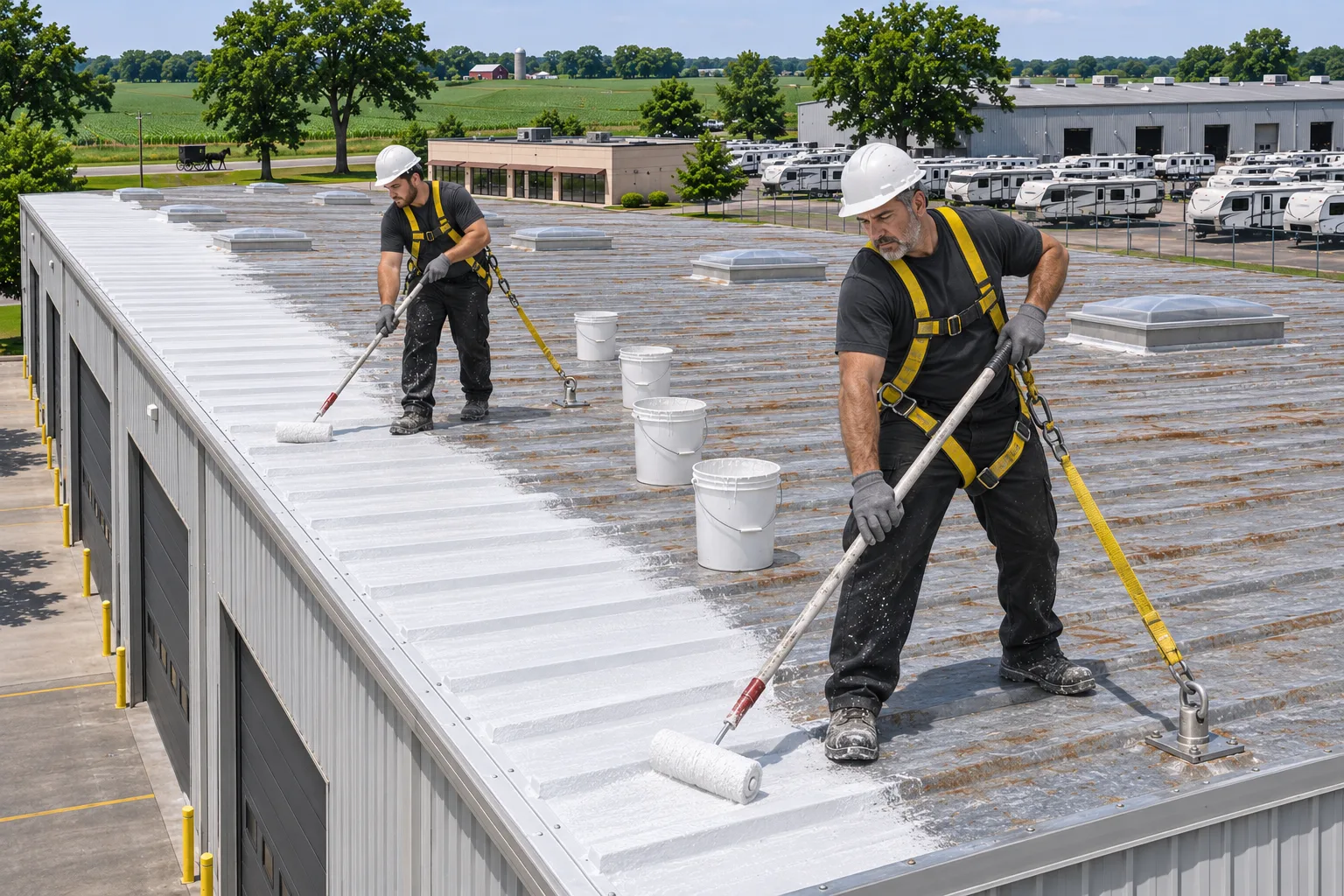
Sloped panels that drain fast, with easy recoats.
Acrylic Roof Coating page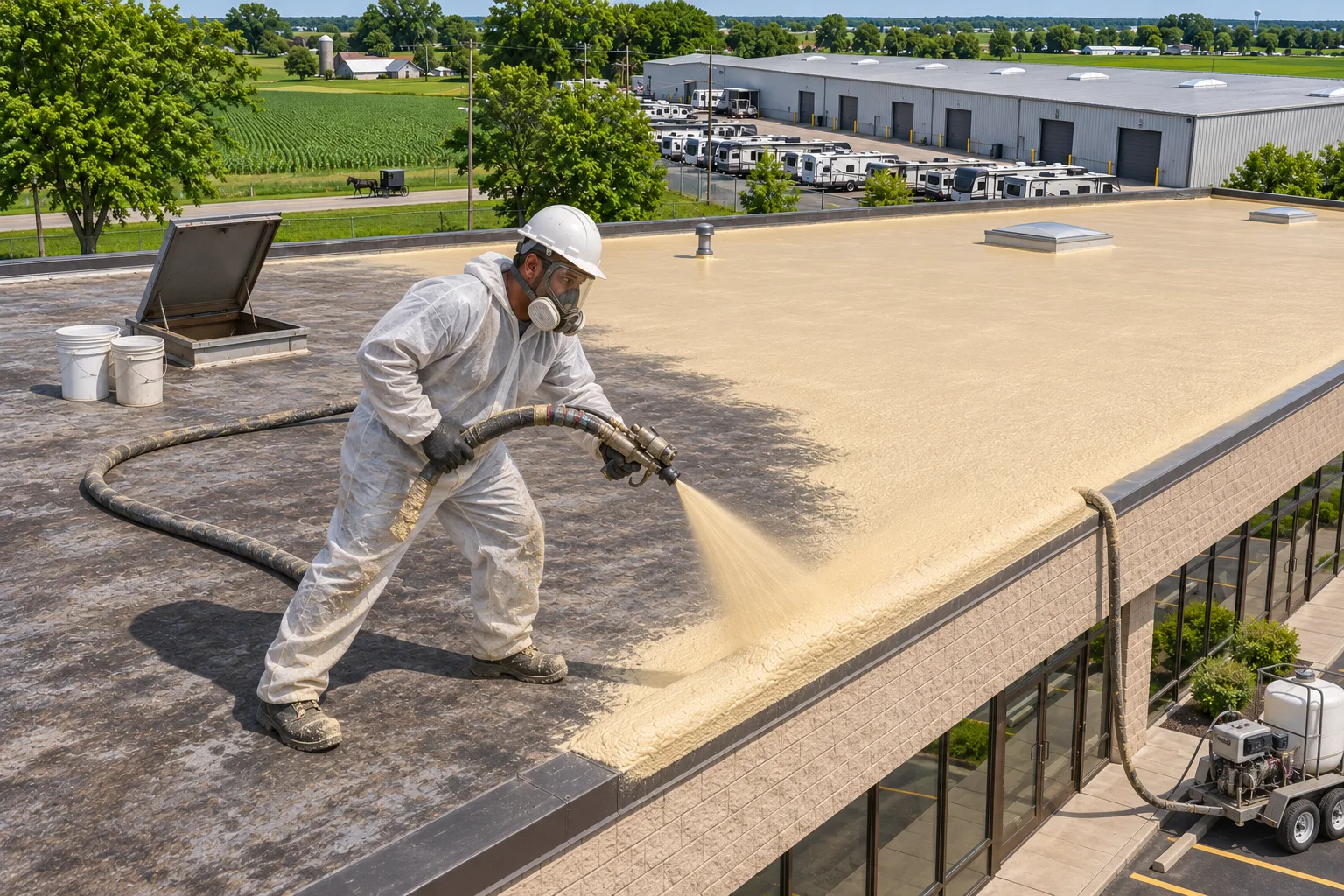
An insulated layer over panels, laps, and screws.
Spray Foam Roofing page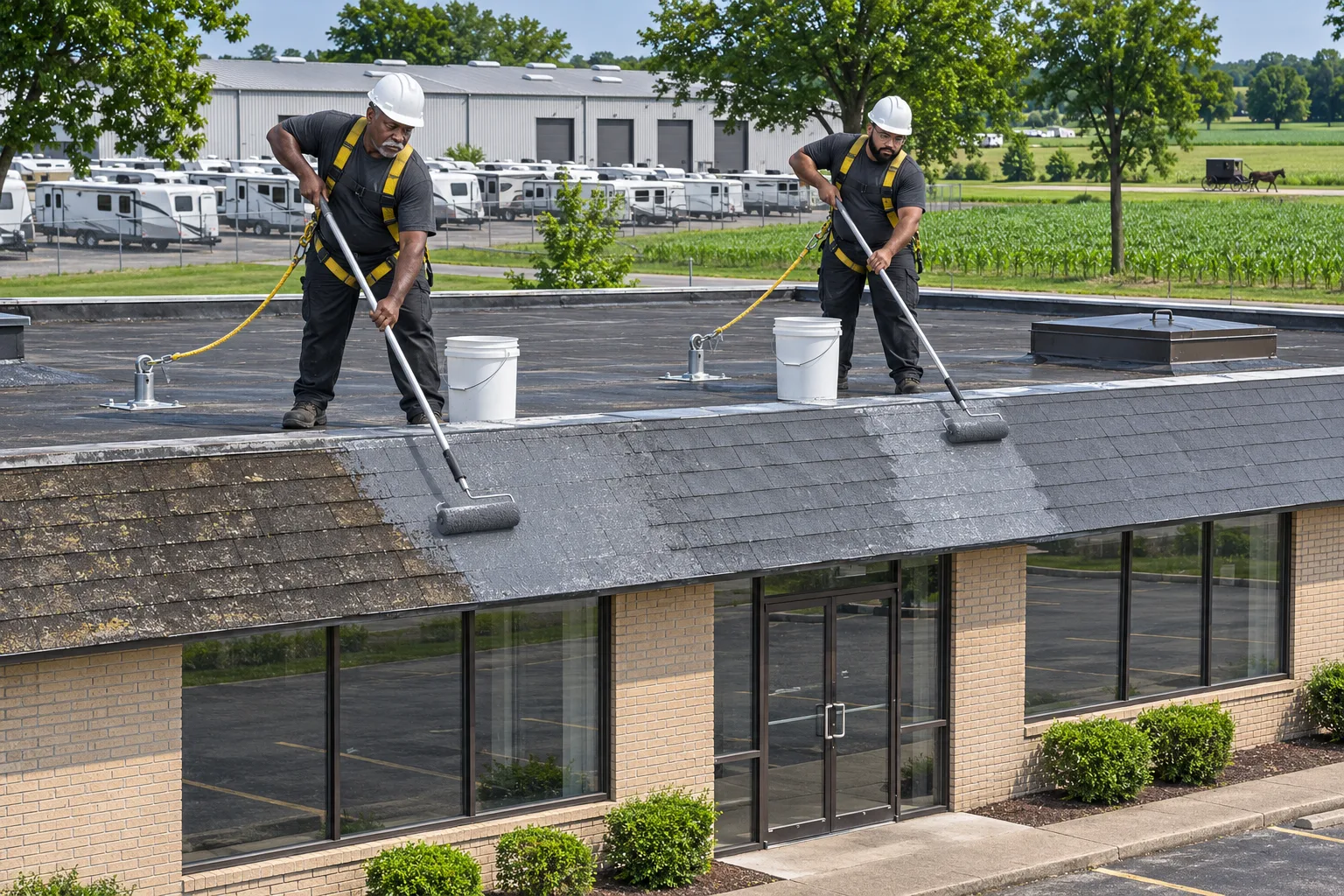
Aged but flat shingles on commercial buildings.
Shingle Roof Coating pageWhat Elkhart owners ask about silicone before a coating job, answered plainly.
Drainage settles it. Silicone belongs on low-slope roofs, gutters, and areas that hold water, since it handles ponding and UV well. Acrylic fits sloped roofs that drain quickly and costs less, with easy recoats later. Silicone takes silicone for future recoats, so we note that in your roof file.
It does over a clean, dry, intact roof at the specified thickness. Silicone holds up to UV and standing water and stays flexible in cold weather. Wet insulation or a damaged deck still needs repair first, because a coating protects a roof in good shape rather than hiding one that is failing.
Silicone is the usual pick for ponding areas, since standing water leaves it intact where acrylic would soften. Application still needs a dry surface. Water that stays more than a couple of days after rain gets drain work or tapered fill, because ponds add weight and collect debris.
Some silicone systems go on at lower temperatures than acrylic because they cure with moisture from the air. The roof still has to be dry and free of frost, snow, and ice, and the manufacturer's minimum temperature applies. Lake-effect snow can reach Elkhart County, so late-fall work waits for dry stretches.
Expect silicone surfaces to pick up more dirt than acrylic, which dulls their reflectivity over time. A gentle wash during routine roof walks restores much of it. Heavy buildup around exhaust fans gets cleaned too, so the film underneath can be inspected.
Pricing falls inside our published coating range of about $2.50 to $4.00 per square foot. Where a job lands turns on drain repairs, wet insulation replacement, primer needs, the thickness specified, and how the crew reaches the roof. The roof walk turns that range into a firm number.
Tell us where water sits on your roof and for how long, and we will price the drain work and silicone together.